

Lead UI Designer Jan Wawrzik about challenges and solutions.
From placing the foundations of a glorious monument to handling the intricate connections of a global naval trade network to unleashing a bombardment on a fortified island – Anno 1800‘s interface has to empower the player by having a multitude of actions within instant reach. It also needs to provide the information to make meaningful decisions: Are my grain farms sustaining my flour mills with enough grain to sate my workers‘ need for bread? Is the morale of my expedition high enough to brave a pirate assault?
The UI design reflects that Anno 1800 is both a return to the series‘ roots and a step into the future by combining proven elements and introducing new systems. This included a huge learning process for the UI team as most had not worked directly on an Anno title or at Ubisoft Mainz before.
Starting fresh
I joined the Anno Team just after pre-production finished. As Technical UI artist I had the task to implement interfaces with a new proprietary UI system of Ubisoft. The team consisted of three: a Lead UI Designer, a UI Designer and me. Only the Lead had previous experience on Anno 2205. Despite having already worked in games it was a daunting task: a UI-heavy title, no previous experience of the series, new tools, colleagues and workflows to get acquainted with.
The smallness of the UI team soon became apparent: working on multiple features and supporting two or more programmers at the same time forced UI to cut a lot of corners. The departure of the UI Lead Designer compounded the problem of understaffing. Promotion to Lead Designer meant half my day being taken up with organization and recruiting a new team member. Ultimately, this proved to be even harder than we thought. Good UI designers were hard to come by and it took nearly seven months to find a replacement. Luckily, we were able to hire two new UI Designers at the same time. We invested heavily in comprehensive training for the newcomers and established inclusive and supportive work culture. Despite slowing production down first, this decision paid off quickly as after four to five months, we had three UI Designers capable of handling features from start to finish with only minor support needed. Full steam ahead!
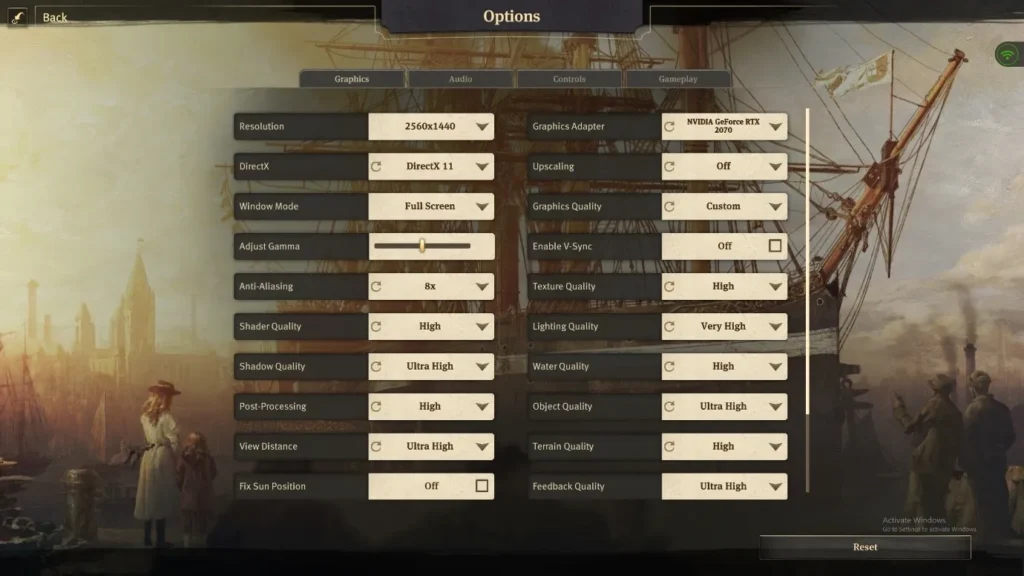
Early prototype testing object menu placement. Floating next to its selected building the menu obscures the logistic information on the road behind it.
Being reduced to a team of two the UI Designer and I were growing more and more unhappy with the visual direction in which the UI was developing. The constant production pressure forced us to make quick decisions, leaving no time for iteration or fresh proposals. Fortunately, we had a good connection to the UI Designers working on other productions within the studio. They supported us for a short period working full-time on refining the style, with the resident Anno UI Designers providing the art direction. This allowed us to reach a visual style we felt happy to continue with while not blocking the overall production process. Changing a style mid-production is always painful. Not every detail could be fleshed out, which has resulted in many small but niggling inconsistencies in visuals, user behavior and implementation— something we definitely want to improve on in future.
Pushing Quality
The bigger team setup and skills added by new team members soon helped to raise the overall quality of Anno 1800‘s interface. Each designer had more time to dedicate to their assigned features. Movies and animations contributed greatly to the overall polish. A healthy feedback culture helped to identify issues early. Feature kickoffs and design reviews included members of game design, programming, UI and quality assurance. Gathering feedback and sharing information helped everyone involved to be on the same page.
In production, not everything goes to plan. Good time buffers and a supportive and collaborative environment helped to keep the stress level down. Dedicated polishing buffers allowed the team to focus more on features, such as the newly introduced expeditions and newspaper features.
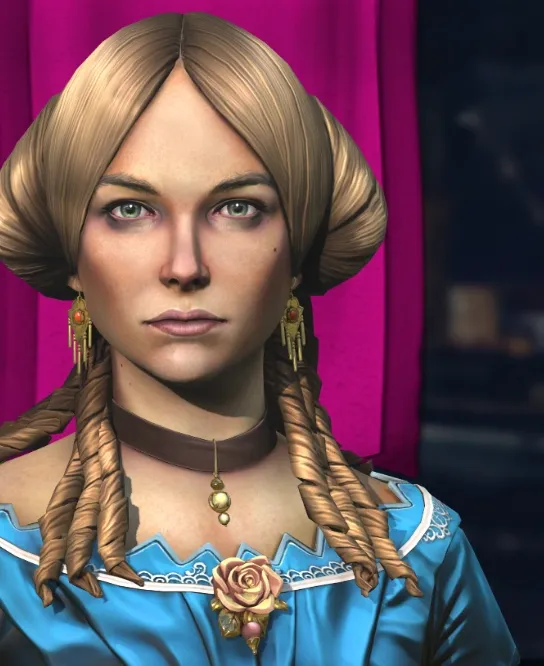
Our specialists were based on different male / female head shapes and had features like mouths, eyes and hair variants added on top. Combined with a similar building block setup for clothes we could quickly create variations.
The old and the new
With little to no previous experience on Anno productions, the UI team looked at older titles in Anno series for reference. I also relied heavily on input by my colleagues and was very fortunate that resident programmers, game designers and artists were always open to share their experience and provide support. This helped a lot to move topics along.
Players disliked the simplified transportation in 2205 where goods were available anywhere on the island. This invisible and effortless concept seemed unfitting to the newly-developing mass transportations of the 19th century – railways and steamships – belching their fiery fumes into the sky, straining to transport their loads to their destinations.
Anno 1800 reintroduced a true logistics system, requiring goods to be transported between connected buildings whilst respecting limiting transport ranges. Connections, ranges, carts and their load were either visualized in-world or by UI graphics. Early interface prototypes made issues apparent with the Anno 2205-style object menus. In 2205 clicking buildings resulted in the attached UI opening close by over the game world. In Anno 1800 this approach resulted in obstructing the transportation information beneath. We decided that proximity of an interface was less important than clear information for a core game system and so located the object menus to the right, breaking with the past.
Another piece in the UI puzzle is the stalwart info-layer system. It proved unsurpassed at providing information at one glance, allowing the player to easily identify problems on their islands. The sleek and clean 3D icons clashed with the art style and setting of 1800. The UI and art department considered a redesign. The readable simple shapes and clean colour coding proved superior to any redesign we considered. This heritage of 2205‘s interface lives on in 1800 albeit with adjusted iconography matching the era.
The highly anticipated statistics overview was a welcomed addition and came with a free Game Update.
Anno 1800 offers the player a plethora of objects, museum artifacts, zoo animals, goods and specialists. Each one of them is carefully hand-rendered. It was impossible to re-use any of the previous titles‘ icons due to distinctly different settings or art. Starting work on the specialists, we soon found that creating high quality and unique depictions of humans took too long. We faced the decision of either lowering the quality or cutting numbers which was immediately rejected by content design. Our resident icon artist came up with the idea of developing a system of building blocks that could be mixed and matched. We prototyped a system of male and female face shapes of different ethnicities in a variety of shapes and sizes. The icon artist then created sets of facial features such as noses, hair and beards. Clothes matching the occupation/speciality were designed in modular sets for possible re-use. With the initial setup, a new specialist icon could be created in 15-20 minutes compared to the three hours before (previously) and still closely reached the hand-painted look and quality of the individually painted icons. The trade routes, a core component of Anno‘s gameplay, experienced a redesign. The new routes design allows creating complex connections between several islands. Players can issue load and unload commands for single or multiple goods. They can order berthing ships to either fulfill their orders instantly and leave or wait until a good is plentifully provided. The flexibility of the route and their creation offered many choices but, unfortunately, some pitfalls. In the beginning, error states weren‘t effectively communicated, and route management was lacking. Thanks to player feedback, trade routes were continuously improved in the free updates that followed.
Test, test, test
Anno 1800 continued the tradition of intensive user testing. A variety of test methods were employed during development. In internal „play-the-game“ days, the dev team collects first feedback and bug reports on balancing, art and UI.
Several diary studies with members of the Anno Union were organized for the main game and one for every DLC. In these studies, players were invited to test game features in one or two week-long game session. Supervised by usability researchers, these players would file daily reports and answer questions set by designers and the UI team. The researchers identified the top issues and then discussed them with the development team. The top findings were addressed in redesigns, improvements to features that added functionality or information, and the removal of bugs and unexpected behavior.
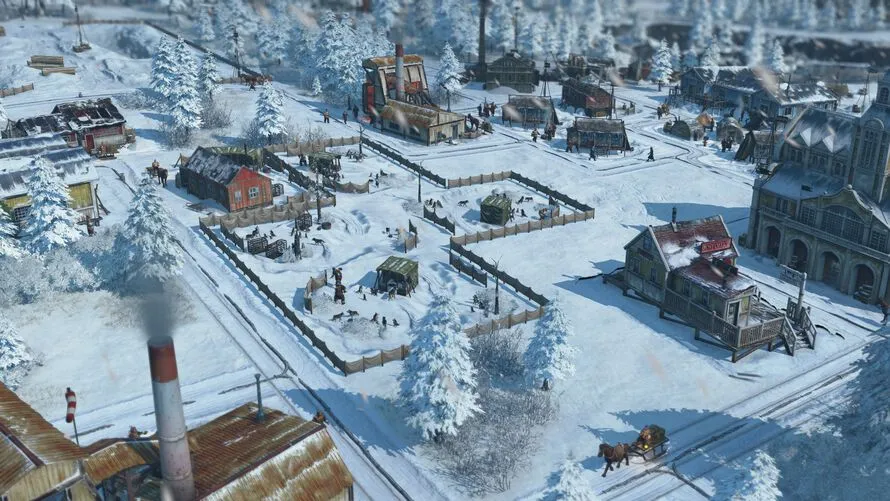
In the Passage DLC all buildings where people live need to be connected to heat pipes.
For feature development, various User Experience research methods were applied. Prototype testing, questionnaires, interviews and internal expert reviews all contributed to the final picture and helped to improve game features.
Being released in the USA Anno 1800 had to comply with the American 21st Century Communications and Video Accessibility Act (CVAA). It requires communication systems within video games to be barrier-free. Accessibility specialists in Ubisoft Bucharest tested the Anno chat system to guarantee compliance.
Production Decisions
On release, Anno 1800 was the biggest Anno to date, featuring both multiplayer, a campaign and several new gameplay mechanics. Despite receiving early feedback that players missed statistics, we decided to give other features priority. This was also influenced by the fact that statistics were released in postlaunch for Anno 2205. Due to a tight time frame and high efforts, not every feature in Anno received proper onboarding and introduction. This, coupled with the missing statistics menu at times, left players in the dark regarding the game mechanics, which did not feel adequately introduced or explained. Thus a statistics overview was added five months after release and was well received.
Postlaunch
The community provided a lot of feedback after Anno‘s launch. The team filtered and acted on reported bugs, suggestions and critique. Severe issues were fixed in patches and a roadmap was laid out for improvements, released in free updates together with the DLCs. Improvements varied greatly in scope and effort. The biggest were the newly designed statistics interface and the completely reworked multiplayer lobby that now supported co-op and voice chat. The team reworked the monument UI to be more rewarding and better reflect the importance of the building in the game.
Scope varied greatly for the DLC user interfaces: Botanica was small in comparison to the large-scale efforts for The Passage. The session gameplay demanded that players provide heat in the frozen north using heater buildings and was supported by a newly themed interface. The novel „session-unlock expedition“ proved to be a big favorite with players. They could follow their story progress on a map which included branching options and was developed from scratch.
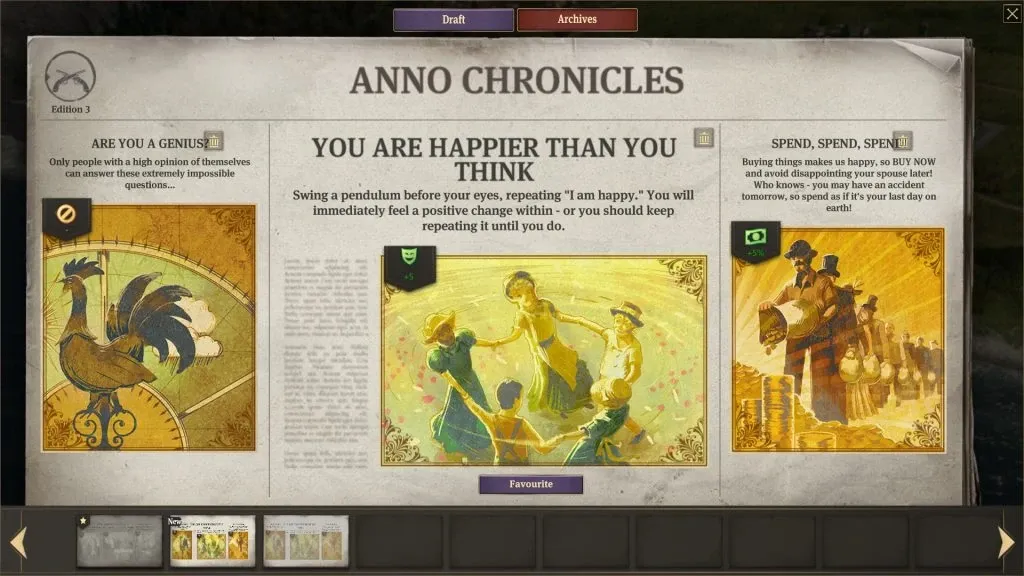
The Newspaper: In postlaunch the auto-publish functionality was added as well as a hint, notifying players that the buffs will not apply in the artic session.
Conclusion
This is only a glimpse of the features implemented, the decisions taken and lessons learned. Ending up where we did at release was due to a healthy mix of experience, the ability to challenge notions, to embrace change and to foster a creative and collaborative environment within the UI Team. The collaborative atmosphere extended to all other departments we depend on to deliver a fully functional interface: design, programming, narrative, user research, audio and of course, quality control. A true team effort.
For the UI team and me, Anno is still an ongoing learning experience. Adding improvements and seeing the community react to it is hugely rewarding. With every new feature and gameplay mechanic we tread new ground while trying to make the new interfaces feel like part of a whole.