

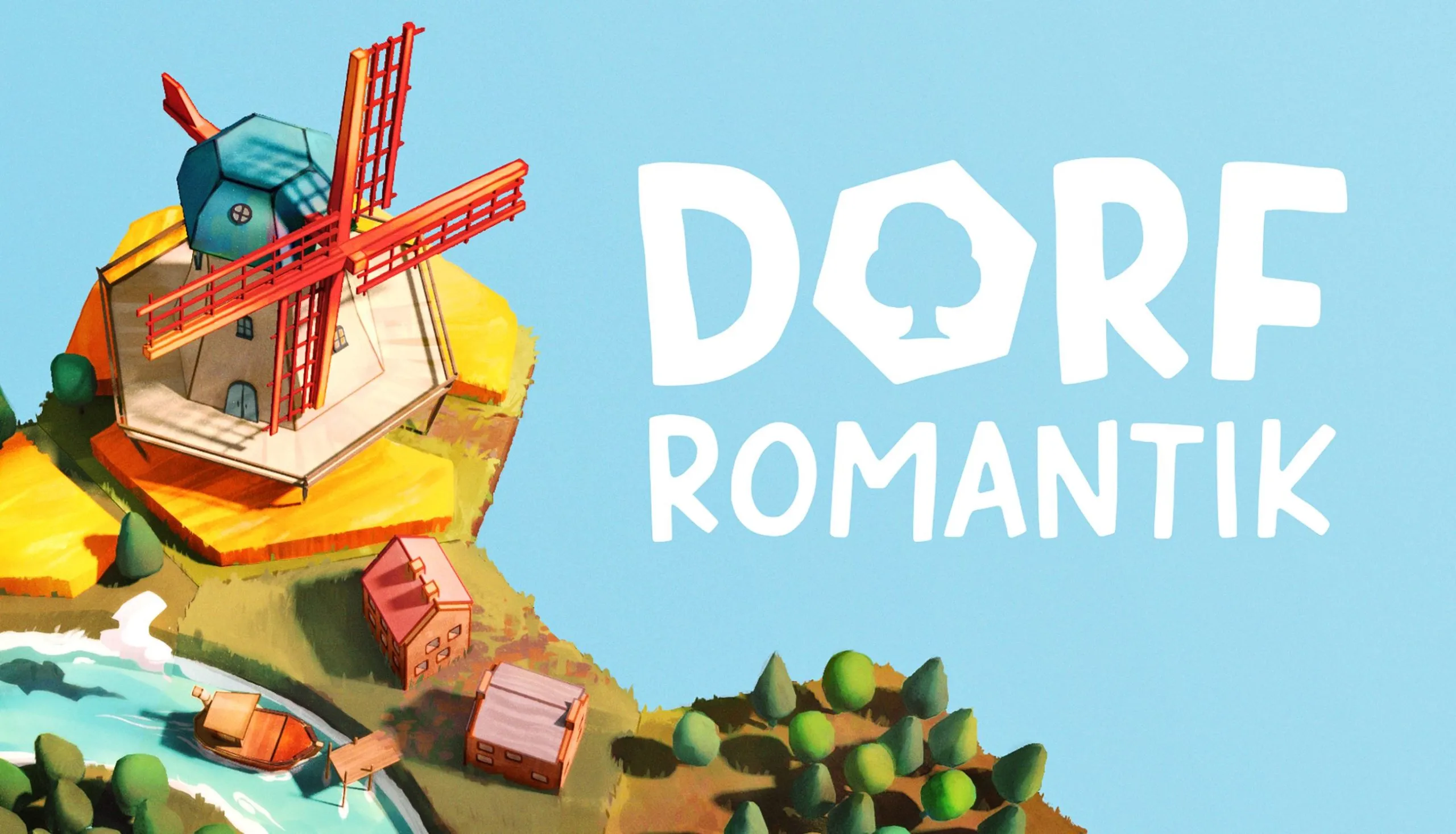
Caution: Danger of addiction! With their debut title Dorfromantik, Toukana Interactive from Berlin mix up the indie games scene.
Dorfromantik (the German word for village romance) is undoubtedly one of the indie surprise hits of the current year. In the special interest press, the innovative mix of building strategy and puzzle game already received top ratings in Early Access. On Steam, a staggering 96% of user reviews have been positive to date.
Dorfromantik also won two awards at the German Game Awards 2021: for “Best Debut” and “Best Game Design”. It was also nominated for “Best Family Game”.
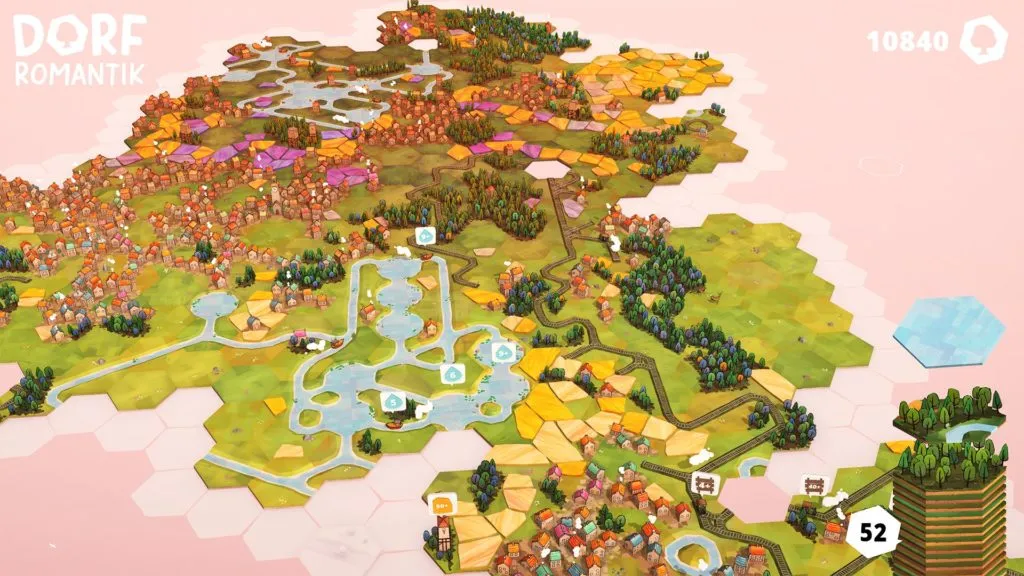
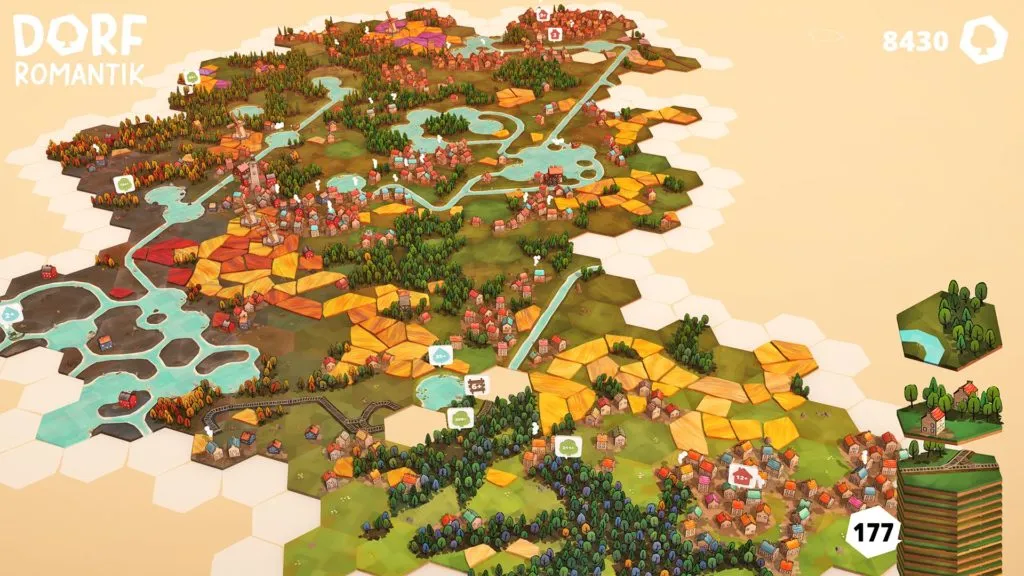
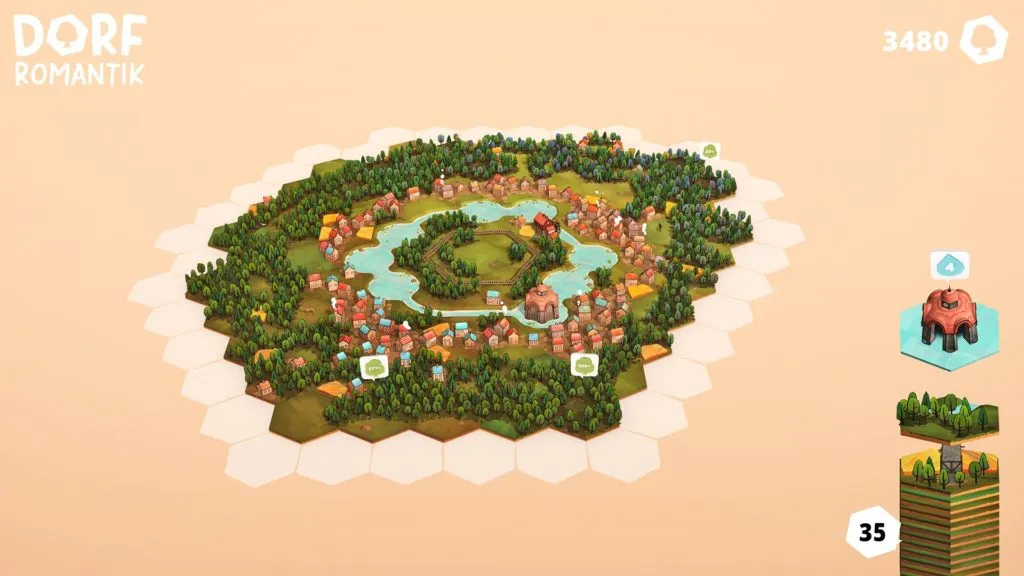
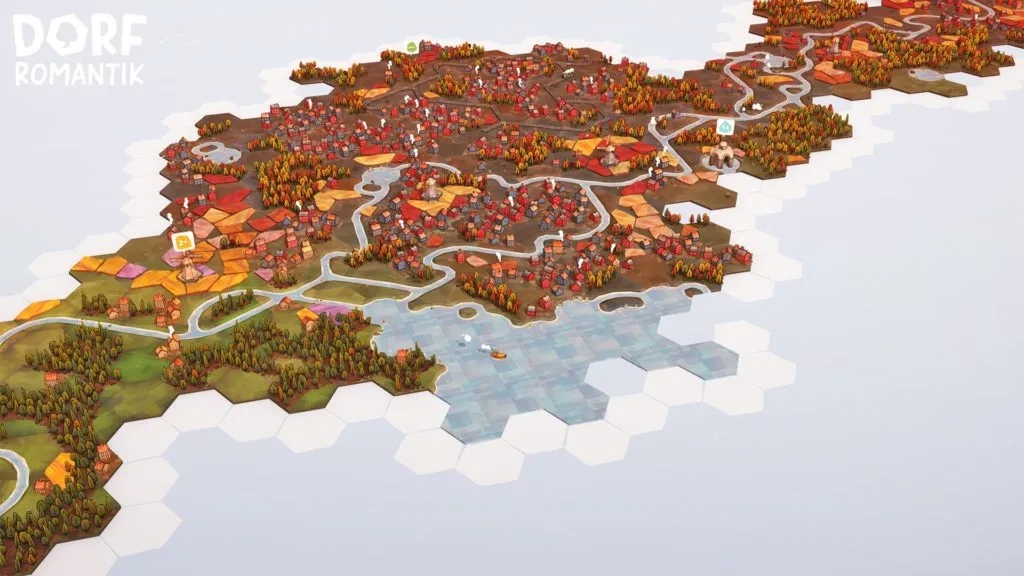
But what makes Dorfromantik so special? Dorfromantik is a city-builder with a focus on a relaxing atmosphere and puzzle mechanics. You create an ever-growing village landscape by placing tiles, explore a variety of colorful biomes, discover and unlock new tiles and complete quests to fill your world with life. Another quality is the unique artstyle with a haptic, handpainted board game feel and high readability through a UI system integrated into the game’s environment.
Dorfromantik is developed by Toukana Interactive, an independent studio founded in 2020. All team members studied Game Design together at the University of Applied Science Berlin (HTW Berlin), where they currently are finishing their master degree in Game System Design while working on their studio debut title Dorfromantik.
UnityContainer.org had the chance to interview Timo Falcke, Co-Founder of Toukana Interactive and Game Designer of Dorfromantik.
How satisfied are you with the feedback and sales figures since the Early Access launch? How were the days for you emotionally?
Timo Falcke: Dorfromantik was a huge success for us, we’re delighted with both sales figures and feedback. Based on our wishlist count and the effort we put into marketing before launch, we knew it wouldn’t be a bad launch, but we didn’t expect the huge waves the game made across all kinds of media after our release.
It’s an amazing feeling to have such a response to the first game we made as Toukana Interactive and to see our dream of being a self-sustaining indie game studio becoming a reality. On the other side, the attention was quite overwhelming for us, and we had a hard time keeping up with press inquiries, player feedback and support requests which put a lot of pressure on us in the beginning. Especially finding the balance between community management, PR and continuing to develop the actual game was a huge challenge.
Also, with that many reviews, there are bound to be a few harsh critics – it took us some time to learn to not let the few negative opinions overshadow all the positive feedback.

How big is your team and how did you become game developers? Are you “village kids”?
Our core team consists of four people: Luca Langenberg, Sandro Heuberger, Zwi Zausch and me. We all studied Game Design as our Bachelor at the HTW Berlin, during which Sandro and I already gained some experience releasing a commercial VR game as a small team. After that, all of us gained some Industry experience working for different companies and we had several opportunities to work together on various projects. With the announcement of the Game System Design Masters Programme at HTW Berlin, we decided to give founding our own Indie Studio another shot by pursuing it as our Master project.
Currently, we all live in Berlin, but all of us grew up in smaller towns or suburbs in the German or Swiss countryside, which inspired us to make Dorfromantik.

In a small team, everyone has to take on several tasks. How did you coordinate this and what were the difficulties?
A challenge we faced was to find solutions for our project management that lets us prioritize and coordinate without creating a huge overhead that leaves us less time to work on the game. Because of that, we switched our project management tools and approached a few times and tried out which works best for us. We also gave our best to prioritize very accurately and minimize distractions during our regular work times.
Staying flexible was also very important to us – whenever the tasks were becoming too overwhelming for one person, we tried to re-allocate our workload to relieve the pressure. Before every development phase, we also had a meeting to re-focus, evaluate and update our time plan.
Some need friction to challenge themselves, others need harmony. How is that with you? What is your team culture?
Generally, we are all good friends at Toukana and the atmosphere is very harmonious and positive. However, we believe that challenging ourselves and considering a broad range of possibilities whenever we make a decision is very beneficial to every project. It helps a lot that none of us is too ego-driven and too insistent on realizing their own ideas. Instead, we always try to figure out what decision would objectively benefit the game the most. Openly raising and listening to concerns, continuously reflecting on our decisions and keeping design discussions on a factual instead of an emotional level are essential pillars to our game development process.
How did you work in lockdown and what were the biggest learnings?
Due to the pandemic, we’ve been working remotely for most of the development. This was never our plan but overall worked out way better than expected.
A big learning in that regard was how beneficial it is to have clear work times and a clear structure in life during difficult times. This, in addition to concrete goals we were working towards, gave us the focus we needed to make the best of our situation.
To simulate an office environment, we also stayed in video calls the whole day while working. Even when everyone just worked for himself, seeing each other’s faces and having the opportunity to always ask for feedback or discuss current topics helped a lot against the lockdown isolation.
How did you come up with the innovative game idea, what inspired you?
In the first month of our development, we created a bunch of different prototypes to try out various game ideas we had in mind. Generally, we pursued a “game mechanic first” approach: Our first goal with all prototypes was to find a simple core mechanic that’s fun, intrinsically motivating and scalable. After that, we tried to come up with a catching game loop and reward system based on this core mechanic.
Dorfromantik originated at the Ludum Dare game jam in April 2020, which fell into our prototyping time frame. It had the theme “keep it alive” – after some brainstorming we liked the idea of keeping civilization alive by balancing it out with nature. As a simple core mechanic, we decided to focus on building a landscape by placing tiles. As a challenge and goal, we came up with quests, prompting you to build your landscape in a specific way.
What inspired us in refining our mechanics and visual design were tile-laying board games as well as a few minimalistic video games that attempt to reduce a complex strategy genre to its minimalistic core.
What feature or detail in the game are you particularly proud of?
We’re very proud of the core mechanic and reward loop of placing tiles, fulfilling quests and scoring perfect placements. The system is very simple, unique and easy to understand while also providing enough strategic depth to keep players engaged for a long time.
Apart from that, we believe we nailed the atmosphere we were going for, a romanticized and idealized depiction of the countryside with harmony between human civilization and nature. This atmosphere is reflected in our artstyle inspired by classic landscape paintings and naïve art, as well as sound design, music, subtle feedback animations and visual effects.
How long did it take until you had the first prototype, and how close was it to the finished game?
We created our first prototype for the Ludum Dare game jam in three days, which is still playable on our itch.io page. While it already contained core concepts like placing tiles and fulfilling quests, it had major understandability and readability issues, lacked some core elements that make Dorfromantik rewarding and motivating (like perfect placements, a comprehensible scoring system, challenges) and wasn’t nearly as polished and visually pleasing. Also, in the original prototype, it wasn’t possible to rotate tiles and edges weren’t relevant for forming groups of connected elements.
However, we stayed true to the relaxing mood, setting and core game loop of our initial prototype.

What tools do you work with and why?
We developed Dorfromantik with Unity, the game engine we’re the most familiar with. It offers all features we need to make games, gets improved constantly and has a great community. Also, the pricing model seems really fair to us and Unity makes it easier to target other platforms and devices in the future. Within Unity we use the Odin Serializer and DoTween plugins a lot.
Our artists use the open-source software Blender for 3D and the Affinity suite as well as Adobe Photoshop for 2D visuals.
Away from Corona: What were the most serious difficulties you faced during development and how did you overcome them?
Since Dorfromantik is our debut title of Toukana Interactive and our first commercial PC game in general, we lacked experience in quite a few areas. Project management, technical realization and marketing posed big challenges. We constantly tried to figure out best practices, evaluated the way we’re doing things and frequently changed our methods.
What helped us with this lack of experience was to see every step along the way as a chance to try out new things, improve and learn for future projects. This mindset helped us to not overthink every decision and keep on moving forward.
You showed your game at the Steam Indiefestival in February. How much community feedback went into the game?
The Steam Festival was one of the biggest marketing events we had before launch. From that point on we received frequent feedback through the Steam forums or our Discord server. We try to evaluate all the feedback we get, and lots of it has already found its way into the game.
Of course, some ideas are out of scope or don’t quite fit our game vision, but especially when it comes to understandability and quality of life improvements, player feedback is invaluable. Player feedbacks also helps us tremendously when it comes to prioritizing our own ideas and judging which of those the community wants to see the most.

How surprising was your success at the German Game Awards 2021? And how did you celebrate – in times of lockdown?
Dorfromantik being nominated in three categories was already a huge surprise and a great honor! And then winning in two categories with one of them being “Best Game Design” was even more amazing.
We took the success as an opportunity to meet up in person with the whole team (which we rarely did during the development) and had some drinks and pizza while enjoying the sun in a local park.
How did you finance the development of Dorfromantik?
Each of us had some personal savings from the jobs we had worked before founding Toukana. After we had developed our prototype, we successfully applied for funding from Medienboard Berlin-Brandenburg, which was our main source of funding. Besides that, we are part of the DE:HIVE incubator program, which supplies us with office space, hardware and frequent coaching and feedback opportunities.
What’s next for Dorfromantik? And do you already have ideas for your next game?
The next updates for Dorfromantik will improve the recently released Creative Mode and our Balancing. Later this year we will add more content to the game, like additional tiles, biomes and challenges. For version 1.0, we have plans for a third game mode that gives the community more ways to compete with one another.
We already have some ideas for our next game, but before we start a new project, we will take some time to experiment and prototype many additional game ideas we have in mind.
How do you see the German developer scene in general? There is always talk about financial support for games. Apart from that, where do you see structural challenges and opportunities, what can be done better?
Generally, the German developer scene is developing in a great direction, with more and more funding options, educational institutions, networking events and incubators.
One big hurdle we found was the huge learning effort required for founding our own company and figuring out the related financial, administrative and legal responsibilities.
While the ways to learn game development grow and improve rapidly, there’s still a lack of support regarding the daunting entrepreneurial side of game development. In our experience, this prevents many great aspiring Game Developers from ever releasing a game on their own. A way to improve this could be to expand incubator spaces, where game startups can learn from each other and take part in workshops or coachings specifically addressing these non-development-related topics.

Timo Falcke
Co-Founder & Game Designer
Timo Falcke is one of the four Co-Founders of Toukana Interactive, where he does programming and game design for their debut title Dorfromantik. Since early childhood, he had a deep passion for designing games of all kinds and ended up in Berlin, where he studied Game Design at the University of Applied Science Berlin (HTW Berlin). There he met his teammates of Toukana Interactive and pursued the goal of becoming an Indie Developer.