

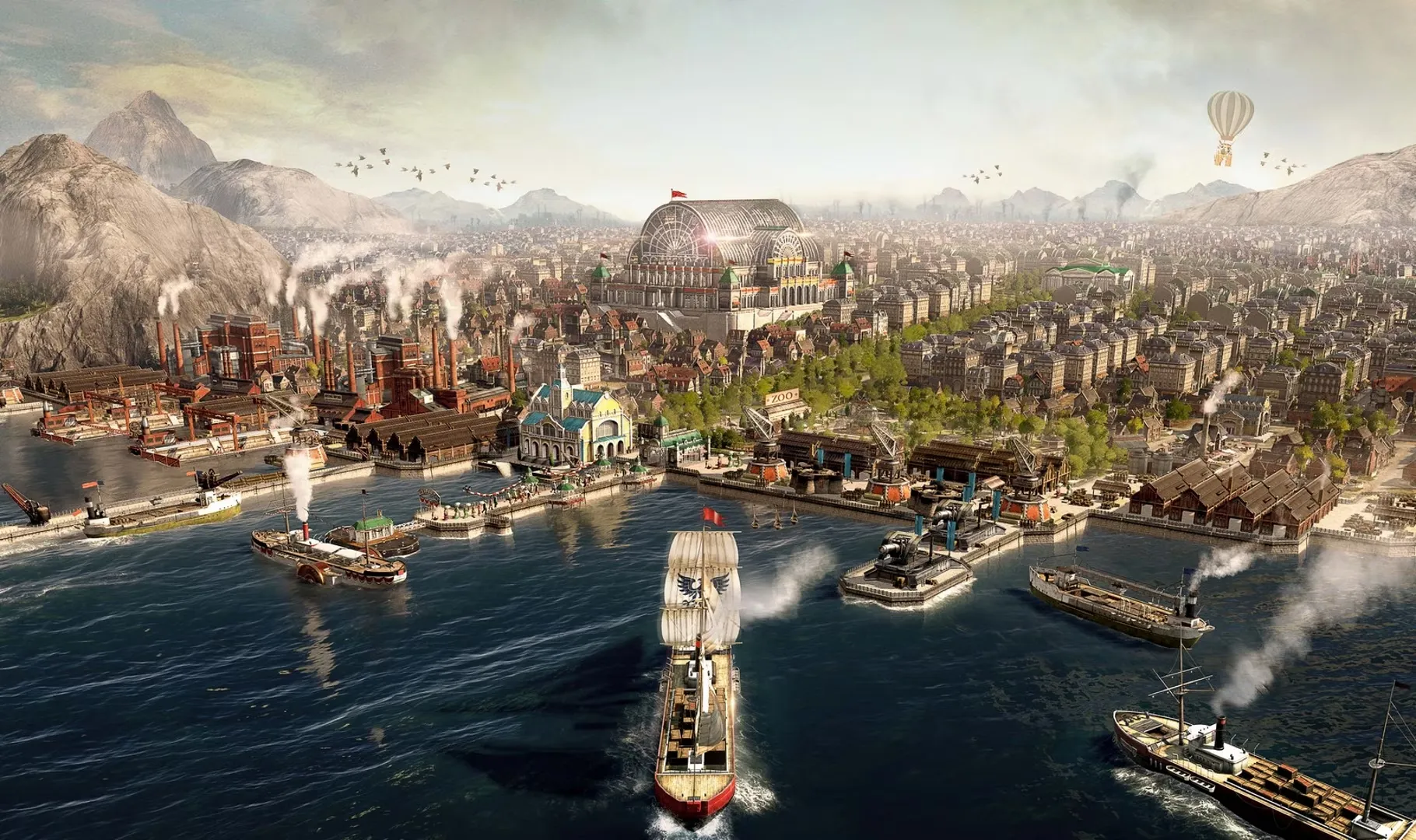
Can city builders tell a story? Lead Narrative Designer Matt Cook tells us the story, how they can and why they should.
City-builders have rarely been seen as fertile grounds for story. Successful narrative design, to use the industry term, requires a game’s systems and stories to come together harmoniously. Anno is such a codified sim, that any story you try to sprinkle over its scarcely-concealed cogs and gears is at risk of being ground to a fine powder in the workings of the machine.
But then there have been cases among city-builders, where the setting, at the very least, has played a significant part. Pharaoh and similar games with strong historical theme understood that context was integral to their sim: the ebb and flow of the Nile became parameters for gameplay, added greatly to atmosphere and began to create the grand illusion of a functional logistical world that has ensured the game has its fans so many years later. More than anything, this sense of place, that meaningful context for the player, will serve the Anno series best in the future.
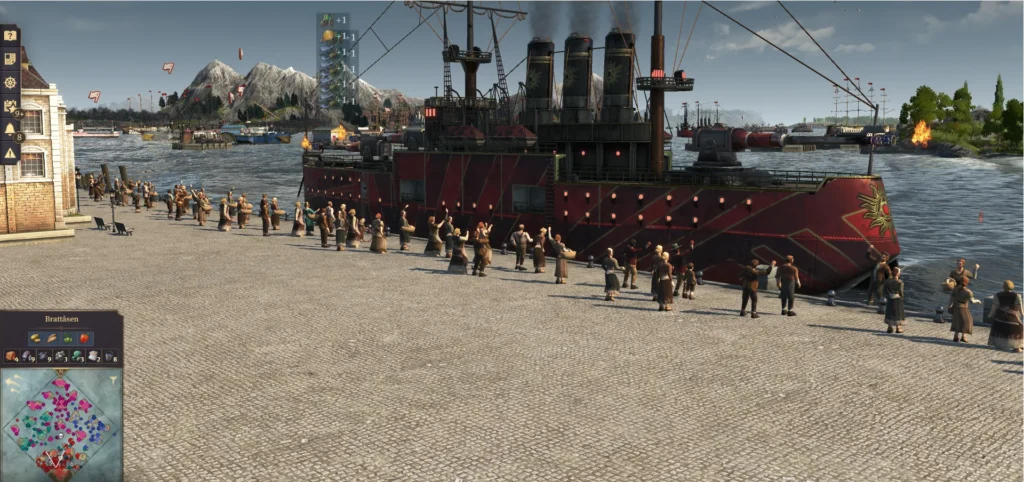
Campaign trail
I joined Ubisoft Mainz roughly a year into production of Anno 1800. It was clear the team was passionate about the setting they had chosen— a situation I can always imagine going a long way towards the success of a project. There was optimism and belief that an Anno set in the fictional past would once again hold its expectant audience captive. A game, aglow with the warm fuzzy vibes of yesteryear that won so many fans over to the series in the first place. What better era for a monumental, mercantile game such as Anno than that of the steamship, the belching chimneys of the industrial revolution, worker rights, the growth of self-start business, rigid Victorian class systems, and monuments of iron like Paxton’s Crystal Palace.
It would, anyway, be my major undertaking as game writer to help transport these themes through our bouncing cast of characters in the game’s campaign mode, which was imagined to be a sort of hybrid that would flow seamlessly from campaign to sandbox at the story’s conclusion. The campaign was to follow, more or less, typical player progress in the opening hours, helping to make sense of the (not always) logical interdependencies of various goods production chains, and the written and unwritten rules of a game series that has forever leaned on its own systemic traditions for identity.
Looking back, it is clear the campaign team, myself included, lacked experience. While there was zero conflict, we didn’t know each other especially well, and this led to discursive stop-start from the beginning. We didn’t understand how incomplete the story-creation tools were at that stage of production, and I feel a lot better now about the mistakes we made, knowing that our building blocks at the time were less than ideal to construct a great story. We had very few quest types for example, and the ones we had were rather conservative (single objectives; deliver, destroy, escort etc.). It is difficult to tell much in the way of story on the back of a simple “deliver 10 timber” quest, no matter how outstanding the writing or audio performances. We were concerned with having enough content to cover 1000-hour save games, when we might have been defining precisely what the quality standard was we were aiming for in our quests. It begged the question: Why focus on story at all in a sandbox-like Anno?
The wider Anno team might be forgiven for having had similar doubts, as we revised the first few chapters of the campaign over and over, breaking it up and putting it back together again. It was a bit of a mess at times. I heard it said that the campaign might be cut from Anno 1800 because of slow progress, and it pained me to hear that, because we had already invested so much of ourselves into it.
Yet despite these apparent setbacks, the team rallied round. It was our good fortune really that we were rescued, deus ex machina, by the arrival of several capable new designers who began to kick things into shape. Structure appeared in our campaign where it had been conspicuously lacking, and while we were still behind in development, things were looking up for the mode. We had our hate sink in Edvard, and we had our ultimate adversaries in the radical and sinister Pyrphorians, who though we did not really flesh out as much as I would have liked, did represent that anti-establishment element in society in big bold letters. In the end, we produced something which I think we can still be proud of.
Initial reviews of the game acknowledged that the campaign could have been better. Famously, the island takeover gameplay towards the end of the campaign found no great admirers among our players. In general, players found the story, writing and world-building only passable. There was nothing wrong, per se, with the campaign story template we were adhering to, although I will say it was never likely to rock the boat too much. You could say we pulled some punches when it came to tackling the many troubling aspects of the 19th century that resonate so much with people today – topics that were considered too heavy for a casual and optimistic game like Anno to deal with. This must have been a difficult decision, and one I respect, because back then, we had no dedicated narrative resource either to champion the history or read around it to the necessary depth. It was always believed that the Anno universe existed alone, outside all real space and time, a flat earth of jolly toy towns connected by cute distances of sea, a fictional world only loosely inspired by our own history. In truth, however, anything you design in a game is a narrative statement – you are expressing your own view and vision of the world, and your values are either brazenly on display or subtly coded within. If you do not establish connections to our own reality and timeline or have nothing to say, it is always likely to feel an abstract and unsympathetic place for players to spend time. In exactly this way, the lack of a definitive judgement on or frame of reference for expansion and colonisation made some reviewers uncomfortable at launch.
We had drawn upon Anno’s story tradition tongue-in-cheek treatments of our historical subject, crossing into fiction whenever convenient (without any great mendacity) to keep the game light. It was not that serious questions of the era were entirely ignored – as with older Annos (1), the game’s quests and side-quests frequently touched the other side and came back again: an apparent family suicide at the centre of our campaign, 19th-century worker emancipation, violence against the monarchy, and the story of George Smith’s escape to freedom from slavery.
Inevitably being discontented with all the early feedback on the campaign and its story, I had the lasting feeling that for the postlaunch we ought to push the boat out: from now on we would ground ourselves in a naturalistic world, with stories deeper and more subtle than Anno had attempted to present before.
Lion’s Jaws
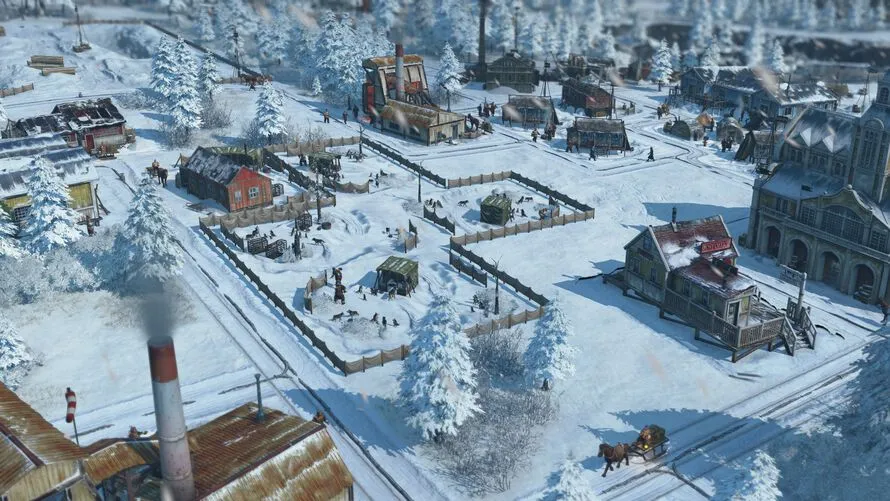
By the time we started working on Land of Lions – long before the dreaded outbreak – it felt like we had hit a bit of a groove. Players seemed to have enjoyed the increased collaboration between game narrative and level art they had experienced with the Passage DLC. With that release, level art had provided many interactive elements in the environment to support our themes, and plenty of their captivating easter eggs besides. The main quest took players on an exploratory journey of the session, and with a grim story that followed the real-life example of the Franklin expedition, touching a genuine darkness even. I remember asking if we could – a simple little addition – attach an info tip to each of the corpses in the frozen wilderness giving the names of the lost on that ill-fated expedition to find a Northwest passage. Players would then be able to check it against a crew manifest document they had found elsewhere, possibly shedding a tear.
We tried to make the most of non-buildable islands, with players asked to find distinctive landmarks hand-drawn in journals or to follow various trails. Some of the players said they wanted even more story. This, of course, is code for “the amount of story for a DLC of that size was exactly right”, something we thoroughly understood after Land of Lions.
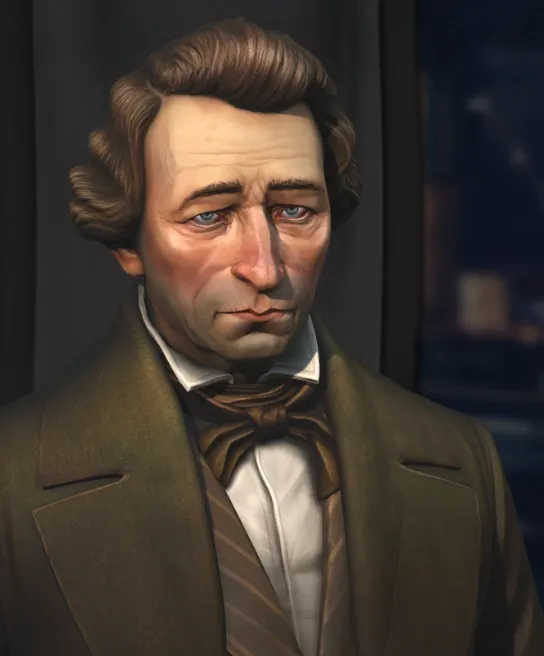
Land of Lions was about extending the collaboration with level art further into something we then termed “session storytelling”. Offering up story diegetically (big word) in the form of dilapidated ancient libraries, drought-stricken oases and using our quaint feedback units (the tiny people in Anno). Chiefly, this all came from a desire within our team to make Enbesa – the name of our Land of Lions session – feel a little more convincing in world-building. Crucially we also wanted to explore what the idea of narratives branching from player choices might bring to Anno.
For the general historical context for Enbesa (the land of lions), we were lucky enough to have someone with considerable academic expertise on African history at our disposal, which set us on a good path, and the world rules we established together extended into the configuration of the session – how Emperor Ketema’s prebuilt settlement dominates the centre of the session map, forming a hub for all of the various player and non-player islands. The idea behind this was to make the place feel like it had a history long before the player arrived there, and one which would undoubtedly continue long after they had left. The player’s role was much akin perhaps to that of a 19th Century European advisor to an African king; a city-planning consultant helping to expand and grow the new capital of Taborime by constructing various city-like districts around Ketema’s central palace complex. While we diverge from real history in typical Anno fashion in many places, Enbesa is all the more plausible as a place and nation for all the hours of research we threw into it.
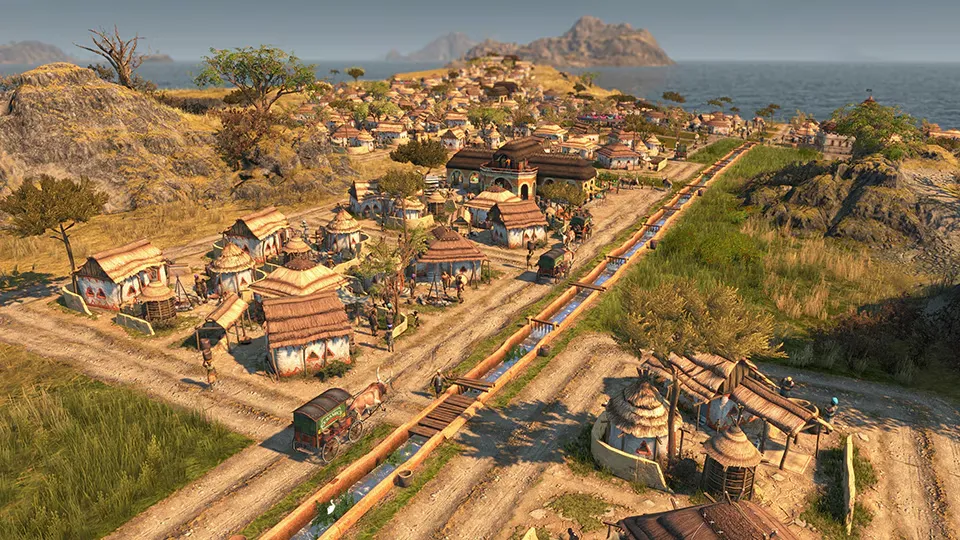
We probably went a bit too far in some parts, which those Anno players who weren’t especially interested in story were quick to point this out upon release. In the future, it’s our aim to make better connections between the stories we tell and the core loop of Anno, so that the quests don’t feel quite so removed from the fundamental nature of the game. However, the main positive was that providing the player more than just a flavour of the era, but something to chew on, can only strengthen the narrative value Anno always seems to have had.
Creating original stories can be a bit like stepping out into thin air. You hope someone out there will make a connection with them, but it also feels like you are taking a risk. There’s a good chance a character’s untried voice might fall on deaf ears or that a storyline is too removed from the common understanding to be enjoyed by most. It’s intimidating, but you know it could be all the more rewarding in the end, if by any slim chance people might start to feel something, or if you find ways to surprise them, challenge them.
To answer the earlier question, this is why a many-faced god-like Anno needs stories – they are a component, often going unnoticed, of the whole illusion. Stories and characters are essential in connecting up our game world to help create that intoxicating Anno feeling – they offer incentives to continue and even provide the player companionship during their lengthy solo city-building journey. Story, among the many other areas in which our team seem almost unnecessarily to put their love and care for fine detail, is what positions Anno pretty uniquely in the city-builder market. Vulgarly, it is a USP.