

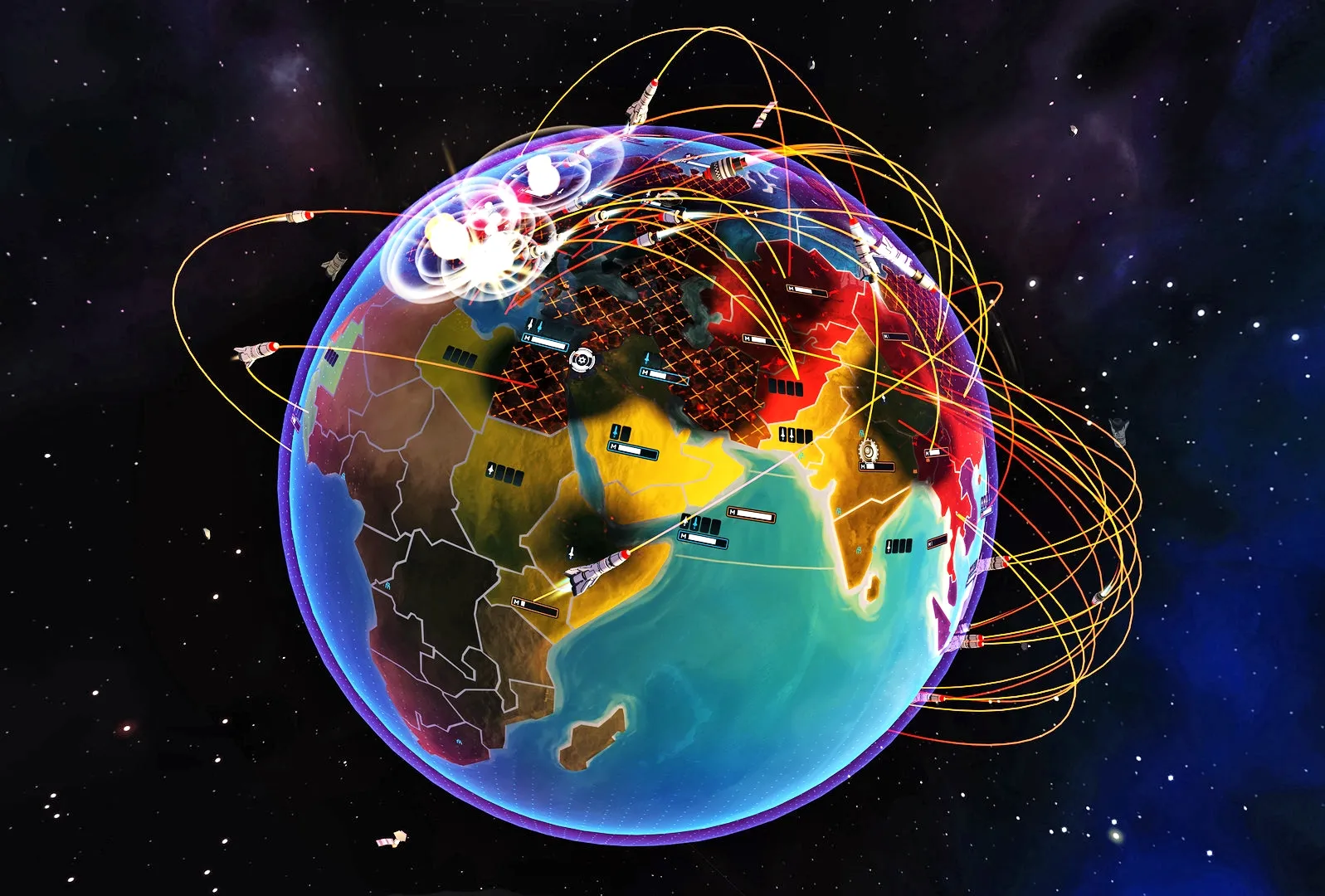
Social criticism in games: How much politics should there be in games and how political are they already?
A shattered apocalyptic world, mysterious events and a brave parcel carrier who must reunite the land – that is the essence of Hideo Kojima’s Death Stranding. Norman Reedus as Courier Sam Porter Bridges brings people together, and the player also gets the tools to do so. He can build bridges and leave tools or messages to other Death Stranding fans in the divided world. Kojima says current politics inspired him. But while in reality walls are built by Donald Trump and bridges are torn down by the Brexit, the Metal Gear Solid creator preferred to connect people. And although Death Stranding is not an explicitly political game, it reflects the worldview of its creator.
But now the question arises: Should video and computer games spread such messages or are they just a simple pastime? Because even if it sounds like a cliché, games are a very young medium, but they have long outstripped other forms of entertainment in terms of distribution. According to game, the Federal Association of the German Games Industry, in 2018 games reached over 34 million people in Germany alone. The average age of the users rose continuously and is now over 36 years; of course, this is also due to the greater spread of mobile devices.
Digital games are a huge market, which in 2018 alone generated revenues of around 4.4 billion euros in Germany. Only recently, the Ministry of Transport confirmed the games funding until 2023; in the future, 50 million euros of funding will flow into the German games industry every year. The new medium has long been part of everyday social and political life, but often does not want to be political.
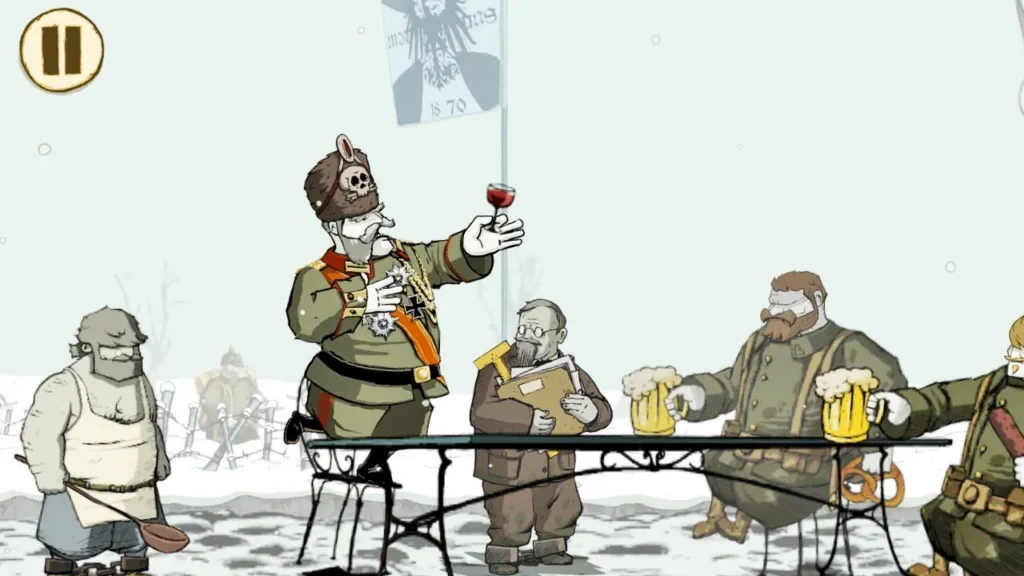
Valiant Hearts: The Great War shows the First World War from the perspective of four characters. While the title is playful like a puzzle game, the atmosphere and the fates of the protagonists are impressive.
Already part of politics
When the games industry gets into the political headlines, it often has a problematic outcome. In 2019, industry giant Blizzard drew inglorious attention to itself. What had happened? Hearthstone Grandmaster Chung “Blitzchung” Ng Wai responded to protests in his home country of Hong Kong following a win at the Asia Pacific Hearthstone Grandmasters. During the live-streamed interview, he wore ski goggles and gas mask and proclaimed the slogan “Free Hong Kong, the revolution of our age!”
Blizzard reacted promptly: The Californians suspended the popular e-sportsman for a year and withdrew the prize money for Season 2, and just a few weeks before Blizzcon 2019, the Hearthstone creators’ in-house show, a colossal shitstorm broke out, which included the hashtag #BoycottBlizzard on Twitter. During the show’s opening ceremony, Blizzard CEO J. Allen Brack apologized and emphasized that the company had not met its standards and had missed the target. Blizzard stands for promoting freedom of expression and connecting people.
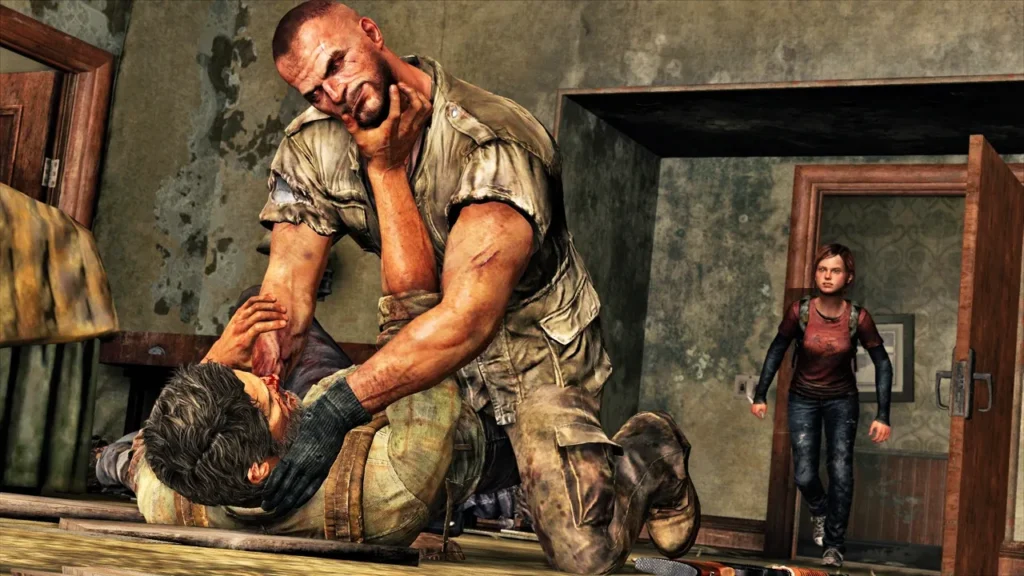
Naughty Dog occasionally got some headwind for The Last Of Us. Vice President Neil Druckmann, however, insists on the artistic freedom of the developers and believes that political views have their place in games.
Also in October 2019, the debate about “killer games” that has been known since the Erfurt school rampage in 2002 returned to the scene. Following the right-wing extremist terrorist attack in Halle on October 9, 2019, in which the perpetrator shot two people with homemade weapons, injuring others and streaming this on Twitch, German Interior Minister Horst Seehofer, for example, said: “We have to take a closer look at the gamer scene. However, the discussion ebbed away just as quickly as it had flared up.
These two examples show how quickly video games and politics can collide. Perhaps this is precisely the reason why the mainstream games industry, in particular, is so reluctant to take a clear stand on political motives.
Stereotypes and platitudes
Although many games make explicit references to contemporary history and politics, most developers are reluctant to take a clear position. Ubisoft’s The Division, for example, focuses on its plot on a terrorist attack, which is spread via dollar bills on “Black Friday”. The ensuing epidemic upsets the social order in the virtual USA and causes the collapse of the state apparatus, including loud protests by citizens. Ubisoft, however, repeatedly emphasized that this setting is not politically motivated.
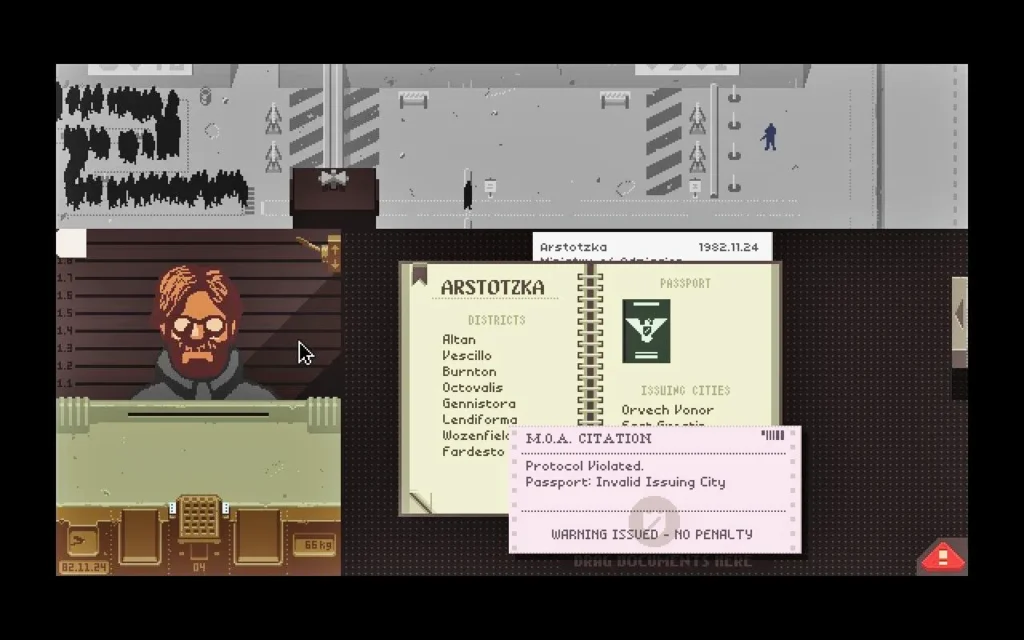
In Papers, Please the player works as border guards in a totalitarian state. If you work well, you get benefits. If you make mistakes, your family may suffer.
Developers of other games such as Deus Ex: Mankind Divided used the term “Mechanical Apartheid” to succinctly depict racism and discrimination within the game world, but instrumentalized it rather than charging it politically. Many other titles use such motifs, but still, see themselves primarily as virtual playgrounds.
Politics and ideologies are a hot potato; few developers dare to touch it. The reason behind this is simple: Studios and publishers make themselves vulnerable. By positioning themselves, developers automatically alienate part of the gigantic target group. The result can be a possible shitstorm and consequently decreasing sales figures. As a result, the message is often steamed down to the lowest common denominator: ‘Oppression is wrong and racism even more so. Something must be done about it. So take up arms!’ Alternatively, games often exaggerate politics and its actors to the point of absurdity or draw stereotypes of corrupt or optionally incompetent dignitaries. Here the offer ranges from the incompetent US president from Splinter Cell: Blacklist to degenerate subjects like congressman Thomas Stubbs III from GTA 4 and the download episode The Lost and Damned. Sincere politicians are rather rare in games.
The few exceptions
But of course, there are games in which politics plays an important role. In strategy games diplomacy is an important criterion and often also a victory condition, but other aspects are brushed aside when expanding one’s sphere of influence – see Civilization. Other titles, such as the Democracy series, place more emphasis on these points.
This War of Mine (2014), on the other hand, is remarkable for several reasons: The game by 11bit Studios focuses on war from the perspective of civilians and addresses issues such as hunger, cold, fear and other hardships. The moral decisions that are interspersed again and again make it an enormously intense and important game of the recent past. The same applies, incidentally, to Papers, Please from 2013, in which we assume the role of a border guard in a totalitarian state and are repeatedly confronted with stressful situations. Despite these controversial topics, both works are very popular – and prove that even “uncomfortable” games can have their place in this industry.
This War of Mine mixes different influences such as freedom of choice and RPG elements. The focus is on survival in a war scenario.
Political: Yes or no?
Now, of course, the initial question arises again: Do games have to be political? We think: of course not, but most of them have long been political anyway. Because they spring from the creative spirit of the developers, a part of their convictions is incorporated. Whether it’s allusions to the current zeitgeist, the use of political ideologists or satirical humour – in a performing medium such as video and computer games, politics and everything related to it in the broadest sense plays an important role. This was also confirmed in 2017 by Neil Druckmann, Vice President and Creative Director of Naughty Dog, concerning political motives in The Last of Us and its successor to be released in 2020. When a fan asked him via Twitter to please leave political views out of it (the tweet has since been deleted), Druckmann countered: “No, I can’t do that. Authors work based on their own worldview. My ‘personal politics inspired the ending of The Last Of Us’.”
Games serve for more than pure escapism. They are, like books and films, artistic forms of representation. As such, however, their creators should take a more durable stand and speak freely about what inspired them to present the listed motifs or characters in the way they ultimately did. At the same time, players must learn to live with different political motives as well as with the artistic freedom of the developers and not to go on the barricades at every opportunity when something doesn’t suit them. But maybe this process of finding the right people needs a little more time and maturity on both sides.