

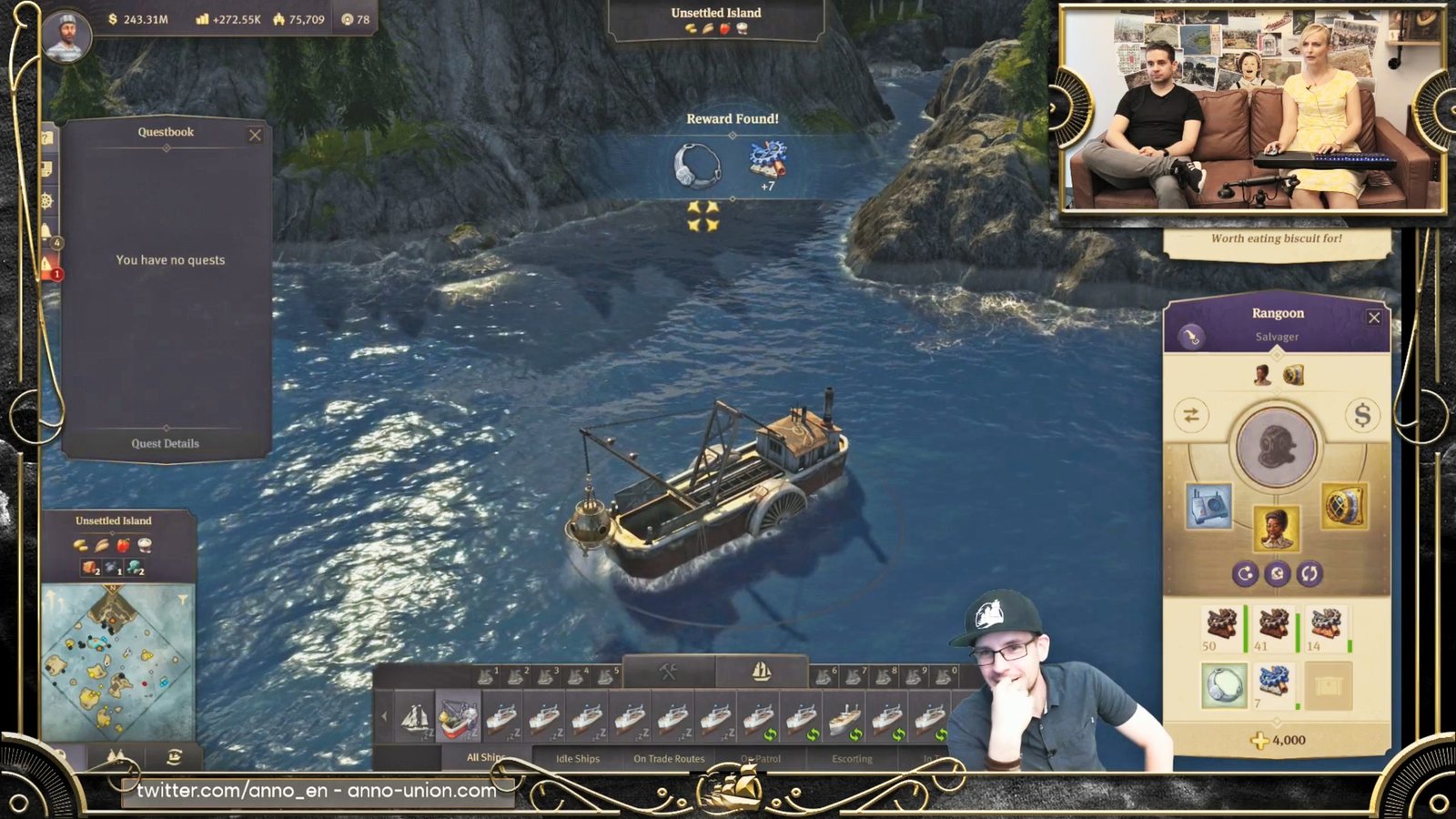
Producer Christoph Knauz and Communications Manager Bastian Thun about motives, benefits and challenges of the Anno Union.
With its history spanning over two decades, a whole generation of strategy gamers grew up playing Anno games. In comparison to genres that attract a bigger mainstream audience, the series benefits from a long-established community of strategy fans who have been with us since the release of Anno 1602 in 1998. Naturally, that strong bond to our franchise means that our players are true experts in our games, but that expertise also leads to huge expectations for every new installment of the series.
With Anno 2205, we shifted our focus; making the game more accessible and streamlined in order to introduce it to a broader audience. While we succeeded with our initial goal, the endgame experience at launch did not match the expectations of our veteran players. They were missing some of the more complex elements of the logistic system compared to previous titles.
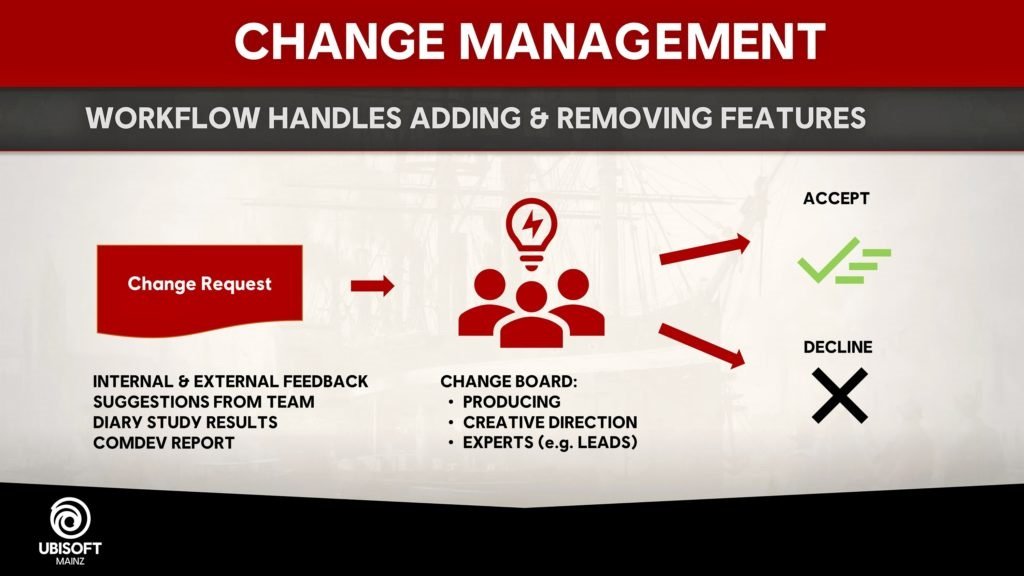
The feedback process: Gathering data, discuss with the team and either accept or decline if a certain feature can make it into the game.
During the post-launch of Anno 2205, we made the decision to make use of the vast knowledge of our community to improve the game by inviting veteran players to internal playtests of upcoming updates and DLCs. The resulting feedback proved immensely valuable in improving the overall experience for new and veteran players alike.
For Anno 1800, we knew from the get-go that the community should play a fundamental role in fulfilling our vision: creating a game that combines the strengths of the series while also evolving from its predecessors. But in order to harness the expertise of our community, we needed a way to gather feedback effectively and as early as possible while also accounting for the impact it would have on the ongoing development roadmap. Thus, the idea of the Anno Union was born, a program dedicated to enable community driven development for Anno 1800.
The Program
To follow the footsteps of fan-favorite Anno 1404 and use that as a foundation to further expand the series, Anno 1800 was given an ambitious scope. To leverage our community’s knowledge, we knew that we needed to invite them at an early stage of production to be able to implement feedback when we were still actively working on a feature, rather than putting ourselves under pressure during the polishing phase. While we had our Anno 2205 test-group to playtest early builds, we decided to extend the pool of players significantly to get as much tangible data as possible, to avoid creating a game only for the more dedicated but smaller group of veteran players. For that, we needed a public channel where we could share early development insights with a wide audience, as we wanted to gather reactions quickly if needed, which could further enable us to engage with our communities directly.
The requirements in the Anno Union were set: a blog-based platform where we would provide frequent development insights, while also allowing everyone to share feedback easily on the content presented. As an initiative driven by the development team rather than a marketing tool, the Community Developer responsible for the program was installed in the production team to foster an active exchange between developers and players. The Anno Union would work as a one-stop-shop for fans to get all the information about the game and function as a platform to funnel player feedback. Especially in early development, our playtesting capacity was limited and providing the unfinished game via an “Early Access” model was not an option for us. To challenge the limited hands-on possibilities, we decided to introduce features in the form of detailed blogs, which received further support from video, live-streaming and votes. One of our biggest risks was that the premise “Help us developing the game” would lead to exceedingly high expectations about our communication. But by tying our content directly to our roadmap, we stayed in control about what kind of feature would become the current hot topic, allowing us to gather specific feedback when we needed it most.
Transparent communication is the foundation for building trust with your communities. But while players might be experts on our game, most of them are probably not experienced developers.
Openly communicating features from pre-alpha onwards while also allowing players to impact the development can be a risky strategy, as examples of player expectations getting out of control are plentiful in the industry. We knew that we had to educate our players about the actual game development process. Beside articles giving updates about the current state of a feature, we also shared insights on how game development works, from spotlights on various disciplines to details about our roadmap. “With the Anno Union, the community has a seat at the table among the development team” became a core message to prevent unrealistic expectations in the impact players could have, as we needed to make clear that working with our communities would not mean us just handing players the steering wheel. Our “Behind the Scenes” development series became not only very popular, it also had the interesting side-effect that our players started actively using them as a reference point to fight toxicity when discussions spiraled out of control.
Production
While building the platform was no small undertaking, the real work began with the announcement of the Anno Union alongside the reveal of the game at gamescom 2017. When we lifted the curtain, the game had just entered the pre-alpha state of development.
Releasing a project in time, in budget and in quality is a keen and quite difficult endeavor, especially if you are working on something like a game, where previously designed “awesome” features can quickly turn into big technical challenges or simply be boring as hell to play. Before an actual project plan is developed, the design of all features and content needs to be available. Based on this, the initial estimates can be collected, and a first project plan can be created. In previous titles, we allocated time after Alpha / during Beta to react on feedback, but with Anno 1800, we wanted to incorporate it as soon as possible.
This decision affected almost every discipline’s daily work and created quite some challenges – while still progressing on existing plans for features, we had to evaluate the feedback, decide on action points, and adapt these plans where needed.
It is still common that community teams collaborate with development, but it seems rare for them to become an active part of the production. In our case, our Community Manager took care of the engagement and reporting, and the Community Developer in the studio would ensure that the reports were first discussed with the production team to identify and prioritize actionable items, which then would get added into the development milestones.
While the feedback we gathered was usually constructive, we are mainly talking about soft data. We needed broader and more tangible metrics, especially for decisions that would have a big impact, and also to have a sanity check in place. For that, we extended our smaller focus tests by inviting the Union members to diary studies, where they could test the game extensively under NDA while providing daily reports and data for the team. When we needed more data to analyze trends or for quality control, we made use of large-scale playtests where we invited larger number of players. In total, we had 5 diary studies and a total of 5 larger playtests from Pre-Alpha up until the release of the game.
Making Decisions
Deciding on what made the cut or not was probably the hardest part for production. We not only had an immense amount of feedback and tangible data, but we also had to work with a set-albeit ambitious- scope for the game. Some ideas were simply impossible to realize, some would only have reflected in small but development-heavy components of the game, and some just worked better on paper.
The easiest win was probably the balancing of the game. Player feedback had a constant impact on the game’s economy, such as fine-tuning or complete reworks of our production chains. An amusing example is that we had initially replaced the classic fisherman, usually the first food-production chain in every Anno game, with the mid-game fish cannery. Starting the game without the classic fishing hut caused an uproar among our veteran players, which was thankfully easy to fix.
But some features require more work than simple tuning. Our “New World” session, a biome inspired by the South American continent, did not match our players’ expectations at all. While our focus was on representing the flora, fauna and non-player factions, players expected whole new civilization tiers for their settlements, including entirely new assets and production tiers. The noticeably clear feedback we got from one of our diary studies led us to completely rework the session, which resulted in a heavy workload for several departments, especially our art team.
While a lot of work, the resulting improvement for the quality of the game was worth the investment. And without our new approach, we wouldn’t have had the early feedback neither the resources for such a drastic rework.
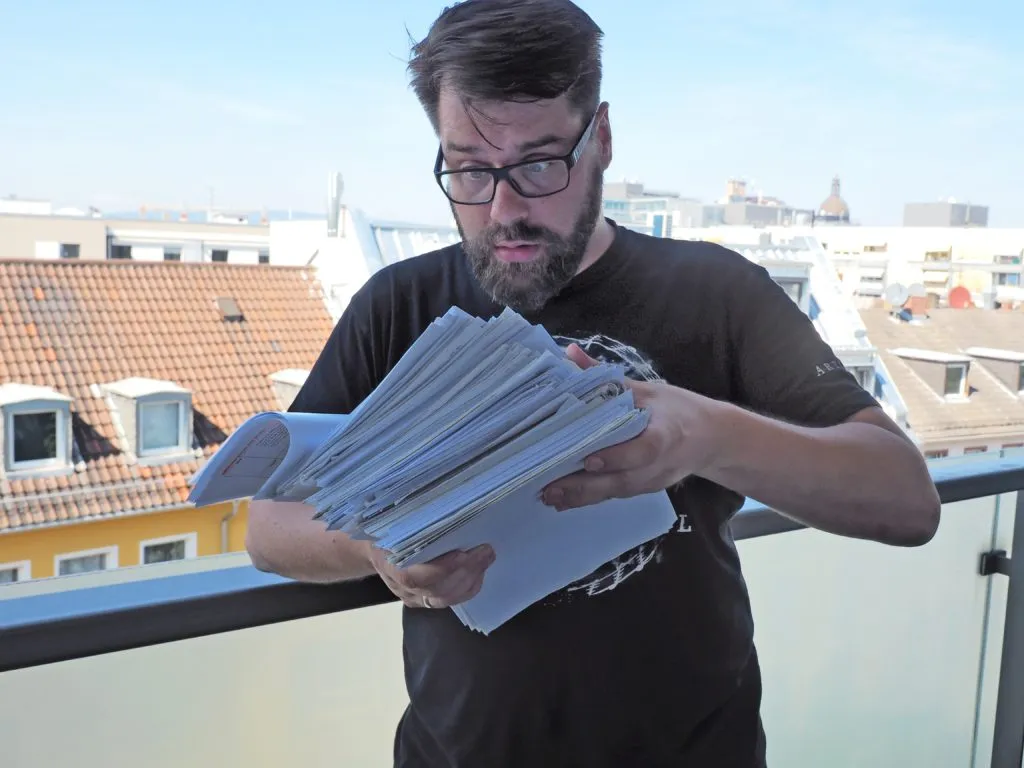
The amount of ideas from our community was nearly endless and we had to dig through lots of material to see, what is possible and what is not.
Just as we gathered player feedback, we also ran frequent surveys for our team to check if transparent communication would put additional pressure on our developers. While some of them were skeptical at first, it was reassuring for us to see that the team became quite fond of our new approach, with 70% of our developers visiting the platform frequently and even using the Union as inspiration or their own feedback channel.
But there was also a feature which would not make the cut: land combat.
While present in various forms in previous titles, it was always a development-intensive oddity to fit into a city-builder. From the beginning, we decided to leave out land units in favor of more complex naval combat, which we communicated in the Union early. The announcement was to this day, the most commented topic in the Anno Union, which led us to investigate further if there could be a way to bring land combat to Anno 1800. We went back to the drawing board; worked on several prototypes, playing around with possible variations based on our experience and the feedback of our players. In the end, we had to admit that it was not possible for us to create a feature that would combine the different ideas of our communities, match our expectations in terms of quality, and keep the production in proportion. Had we allocated the required resources to achieve just a minimum viable feature, it would have resulted in cuts to several major and minor features.
Thus, we decided that at least for Anno 1800, land combat was not a feasible option. When we announced that, despite our efforts, we would not be bringing land combat to Anno 1800, the reactions were mixed but mostly constructive. While a large part of the vocal community was disappointed, we could also see a shift in their reactions. Most of our core players previously stated that the missing land combat feature was a deal-breaker, but they eventually understood our decision and so the sentiment shifted more towards “sad but okay with your decision” with four times more players even stating it was the “right choice”.
Verdict
For us as at Ubisoft Mainz, a studio with several decades of experience, the focus upon a community-driven development approach was a big and exciting change. It forced us to re-think our own production methodology and to challenge our own habits. We strongly believe that without the Anno Union, Anno 1800 would never have become the most successful game in the franchise. We will continue to use this approach to improve our games together with our communities.
It is also great to see that the humble and transparent communication via the Union not only had a positive impact on the overall sentiment in our communities, but its inviting nature also became the entry point to the series for many new players.