

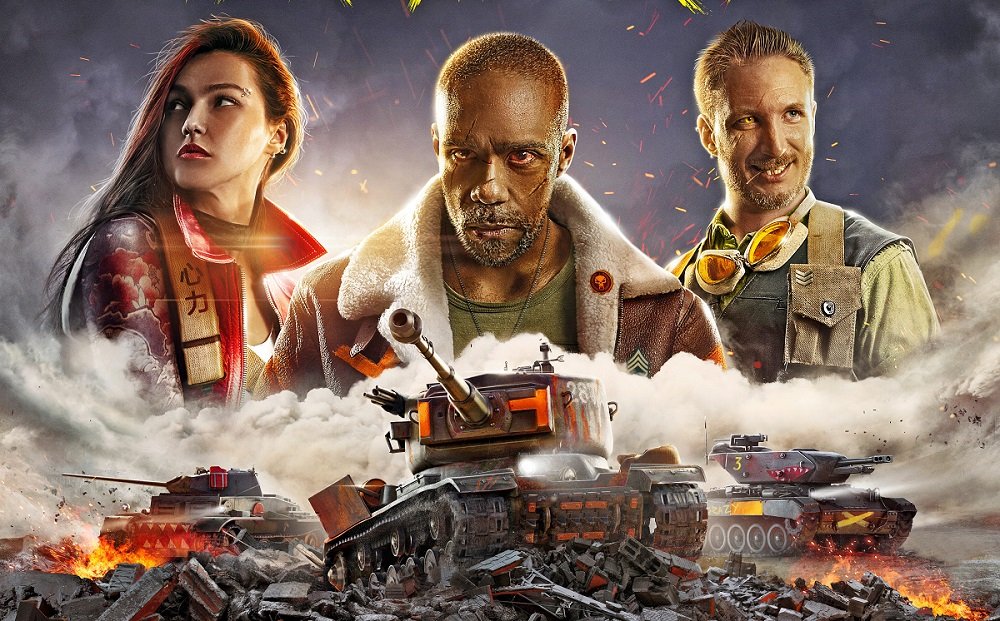
The dynamic development duo Jeff Gregg and Darold Higa discuss the concept of Mercenaries, a radical, new, console-exclusive update for World of Tanks that promises to change the game’s landscape forever.
World of Tanks first became available on PC to the public in 2010, and after smashing all expectations of it being a cult- or sleeper-hit, it went on to amass over 100 million players all over the world. The console version spearheaded by the team at Wargaming West (formerly Day 1 Studios) followed a few years later in 2014. Since then, while successfully adapting the World of Tanks formula known and loved by our players for the console experience, we’ve sought to break out of the box and, where possible, do things our own way. At the end of June 2018, we launched Mercenaries, one of our biggest and most radical updates for the PlayStation 4 and Xbox versions of the game. This was a culmination of a long road and a lot of different efforts by the development team.
What is WoT: Mercenaries?
The driving force behind Mercenaries is that we wanted to produce a console-specific line of vehicles. This hadn’t been a big priority before due to bandwidth at Wargaming West, and the scale of the content we still wanted to implement. We did pay close to attention to player feedback and requests, while also following our own hopes and dreams for developing something that was truly console-specific. There was also the issue that we were beginning to run out of vehicles from World War II, the time period our game is based around. Players always want more tanks, but to get more tanks, there needed to be an element of historical compromise. We’ve dipped into blueprints and paper designs before, but what if we could do something else?
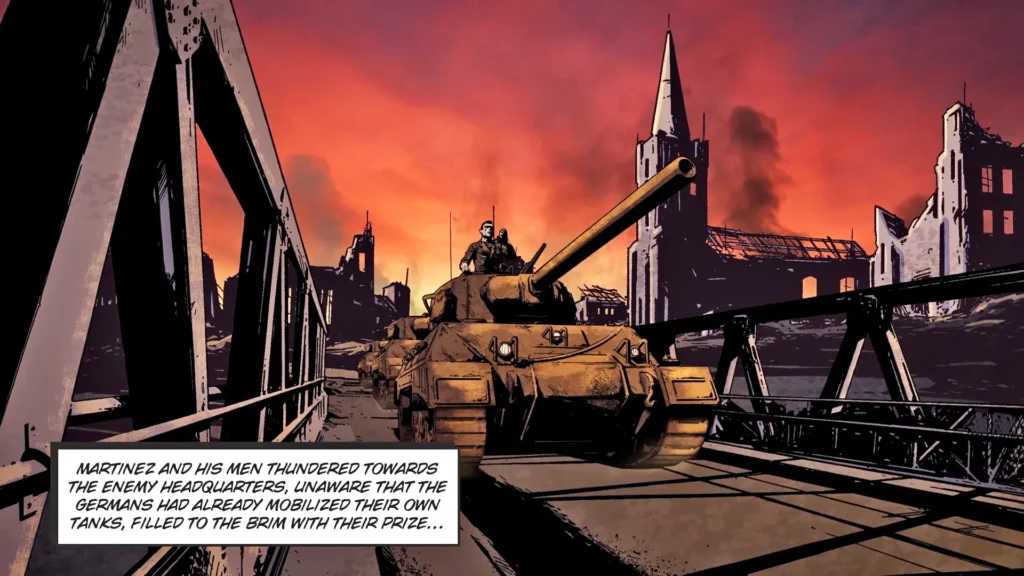
It’s a nerve-wracking experience to tamper with an existing game, formula, and general ecosystem that millions of people have become used to over the years. We took War Stories, the first and only story-based experience in any World of Tanks game to date, as a starting point and testing ground for what would be possible with our audience. Much like the way we introduced a lot of features to the game to eventually implement in and make War Stories possible, we set up the universe and concept of World of Tanks: Mercenaries through War Stories.
In April 2018 we released the »Spoils of War« saga, a series of standalone stories set in a world where World War II didn’t end when it was supposed to. In this world, the Battle of Midway didn’t go too badly, Japan didn’t lose any of their core fleet carriers, and the Axis powers typically made fewer mistakes and pursued more modest goals from the war. This war took a toll like no other war, and the cumulative effects changed society for good in our world, let alone the one we depict in Spoils of War. As a result, the nationalism to which a lot of soldiers and civilians once held is called into question, and the world begins to fall apart. The heroes of this story are struggling with the choice between fulfilling orders versus doing the right thing, and as a result, they decide to become guns for hire at the end of it all. Coupled with the state the world is in, the Mercenaries universe was born, and set the stage for what we could do in the future.
Creating Frankenstein’s Monsters
The next thing we worked on was the introduction of the Mercenaries nation, which would open the floodgates for a host of new, never-before-seen vehicles to join the game. In the real world post-war period, a lot of countries had a large surplus of vehicles, and some experimented with the creation of hybrid tanks. For example, the French threw together parts from the Chaffee and AMX vehicles to see what was possible. We decided to take that a step further and look from the perspective of how mercenary soldiers might arm themselves with whatever resources they can get their hands on. Focusing on mercenaries relaxed the idea that we could only use vehicle parts from one specific nation, and with surplus resources available from so many of the major players from World War II, we had a very large ballpark to play in.
While historically we focused the development of the Mercenaries vehicles on a general post-World War II era, we’ve avoided specificity to incorporate a breadth of concepts and possibilities. For lower-tiered vehicles, we can dip into the World War II vehicles, and then for the more high-end vehicles, we explore what was kicking around during the Cold War. Anything should be possible; in our universe, Mercenaries are operating all over the world, not just in Europe, Asia, or any other major fronts. Conflicts can, will, and do break out anywhere, and civilians and soldiers alike have started adapting to be prepared for this.
While ultimately, historical accuracy is difficult to preserve when creating new content like this, we did strive to retain historicity in how individual components could introduce new strengths, weaknesses, advantages and disadvantages to vehicles. There’s also definitely a historical basis for this in tank variants, and how vehicles are used once they’re retired from active combat. Many vehicles (or parts of them) go on to return in different forms and fulfil different functions, their spirit living on through future engineering innovations. And with multiplayer battles incorporating tanks from all nations fighting with and against each other, the Mercenaries concept fit very well with the spirit and concept of World of Tanks. Though we do have nations present in-game, battles are essentially a free-for-all, with no national loyalties to speak of.
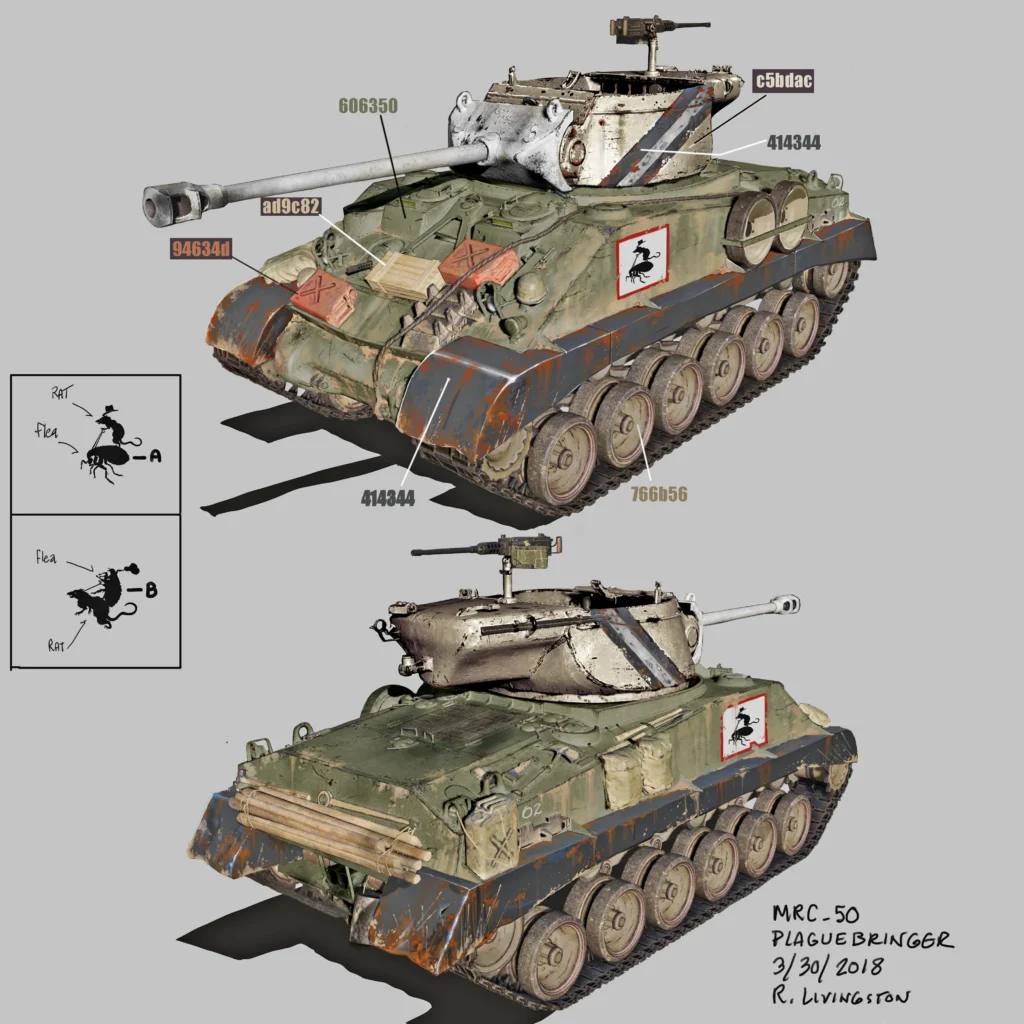
Once we had established our concept and had an outline for the fictional universe that could introduce it, one of the very fun parts of our journey was beginning to create the Mercenary vehicles. It wasn’t a case of simply creating so many Frankenstein’s Monsters, and just mashing together parts from different nations and hoping for the best. We could end up making a tank that was total garbage, or a demonic creation that wouldn’t wash with players. We have a lot of fun pictures and videos of some of the early efforts we tried, but we used analytical data from the game and community matches to look at the more average, consistent performers across all tiers and tank classes in the game. Numerically and from the perspective of tanks stats, we knew this was a logical place to begin for us.
We initially assembled approximately fifty vehicles based on averages and in-game performance, and at this stage we didn’t have any idea what they looked like, how they would work, or if they could work. Size could be an issue; they could be too small, too big, or completely disproportioned. We made a couple of tanks by hand, and an automated system to assemble the parts into a new vehicle. Another factor that we had to consider was the look of the tank; did it look cool, and could our artists work on these Frankenstein’s Monsters? Did they make sense, or was it a case of some of them being too ridiculous? We whittled down the list drastically, and for our initial launch, we ended up with half of the vehicles that looked reasonable to work with.
Hand in Hand with the Community
Being a social game and experience, we work very closely with our community and try to keep our fingers on the pulse with what they want, and what they’re talking about. To this end, we sought out some trusted players who, under NDA, could play these vehicles in a super test environment. While our goal was the opposite of historical accuracy, and these players understood this, we would fail completely if these vehicles were to be introduced into the multiplayer ecosystem and our core audience hated them or became disengaged with the game as a result. The core feedback from these sessions added some ideas for us and highlighted a few issues. Guns floating from the turret, the turret being embedded in the hull; there was some visual disparity, and as a result our tank designer looks at the pieces and assesses how this can be assembled and iterated upon.
There were a lot of tweaks as it went down the chain from the community to development, and eventually we arrived at the line-up we prepared for launch and Update 4.5. At this point, we could start really looking at the aesthetics of these vehicles, making them pretty, and trying to visually communicate that the Mercenary concept isn’t just the developers shoving things together. These are Mercenary vehicles, created from scavenging battlefields, going to vendors, and making pieces work as a vehicle for their job which isn’t funded or backed by nation states or weapons manufacturers. We wanted to give these vehicles a rusty, rugged, shake-and-bake, grungy type of look. And we genuinely looked at our results and thought »goddamn, this looks really cool!«
Another massive new feature that we introduced alongside the Mercenary vehicles and overall concept was how players could access these vehicles. We wanted to be true to the fantasy of being a Mercenary. Especially compared to the current process of working through a Tech Tree, where players use a combination of experience and in-game currency to buy new vehicles, we wanted to create more of a sense of immersion with this new Tech Tree. We thought about what exactly it is that a Mercenary does; they are guns for hire, and they take on jobs and contracts regardless of motivation or morals, in exchange for monetary compensation. The Mercenaries in-game, some of them being former soldiers, no longer take orders from the President, from their commanding officers. They work alone, and they need to keep themselves active and mobile; they need money for ammo, fuel, repairs, and simply to survive.
Rebels of the Battlefield
We attempted to allow people to earn vehicles through fictionalised tasks from unnamed, shadowy clients. They would require the player to perform tasks in a certain order, with the ultimate payment being the vehicle the player initially accepted the contract for. Certain criteria and stages could inform the method by which the tank is obtained; for instance, if the tank the contract is for has a German engine, maybe the client would require you to destroy some German vehicles to assemble the tank. More than jumping through hoops to get a vehicle, we wanted this to give players more freedom on what to aim for, and how they wanted to progress.
We have our current Ops system, but this was a much more complex system. We set limitations to prevent players being inundated with choices, so there are only so many clients giving contracts at a time. Of course, many players either don’t want to grind through tasks to obtain these vehicles, and many don’t have the time. From a monetization perspective, we offered the choice to buy the vehicle outright, or to use Gold to skip certain tasks or stages. We viewed this as a good compromise, as we could still generate revenue from these new vehicles in the same manner that we do with Premium vehicle and provide a way for non-paying players to also enjoy this content.A lot of the influences for how the Mercenaries should behave and approach the contracts in the game came from a few different sources. »The Wild Geese« is a great film, and shows mercenary soldiers fighting for a contract, dives into why they fight, and there’s a lot of double-crossing too. From the literary perspective, the science-fiction »Hammer Slammers« features interstellar mercenaries who hop from planet to planet, doing jobs they have to do, and they’re totally in it for the bonus. »Area 88«, a Japanese manga series, was another source of inspiration; it follows fighter pilots locked into a military struggle, who must sign contracts to maintain their aircraft, to keep fighting. Stories stir people’s imaginations, and while some of this may not be realistic, it connects in a way a lot of great stories do. There’s a lot of intrigue to the concept of mercenaries, they can even be romanticised in a sense, like pirates. Fiction looks at pirates as exotic, fun and adventurous rather than being stuck in a horrible line of work; they’re in it for the gold and excitement. Through the same vein, we took this approach with the Mercenaries.
War Stories as a Fundament
While we had the backstory in our heads to justify the creation of the Mercenaries, we also looked to use »War Stories« as a platform to launch this universe. Spoils of War set the scene and offered a window into the concept of soldiers turning their backs on their duty in favour of earning money from contracts, and »The Heist« would take the concept even further. Following the heroes from Spoils of War, who have taken on new codenames to reflect the changes they have gone through. There was some internal debate on how to approach the characters; people become mercenaries for different reasons, and while mostly these reasons are monetary, some people are said to be addicted to the adrenaline of combat. Even in a nation at peace, would these characters still seek out the thrill of the fight?
In the world we created, in the aftermath of a short nuclear exchange that ended World War III and put the USA and USSR out of commission as global superpowers, we knew that this was a world of uncertainty. No one knows who is making alliances, there’s definitely a paradigm shift in the balance of power in the world, and atomic power becomes a major strategic factor in who holds power. We thought of a client with nuclear aspirations, and the story developed from there. The Heist subsequently became a story of these characters stealing nuclear material from a surprising, unprecedented nuclear alliance between the USA and the USSR. In terms of surprise and uncertainty, in planning this story twist, we realised that after their nuclear weapons devastated each other’s capacity to produce any more, both nations realised that they had more in common than they initially thought and were stronger united.
Now, Mercenaries is out in the world, and we’re readying our second phase of Mercenary vehicles and crews. The reception by players has been largely positive, and these guns for hire have provided a breath of fresh air for the game. In the future, we’re excited to continue to develop the concept of vehicles assembled to fulfil the wants and needs of these shady characters. We’re very interested to see what players think would make a logical or cool vehicle to fit into this universe, be it for fun, or just as an interesting assembly of players. This is an extra layer of console-exclusive features that players can influence, and we wholeheartedly encourage and embrace anything that could have an impact on the future of World of Tanks on PlayStation, Xbox, and beyond.
Jeff Gregg, Darold Higa, Nathan Whincup