

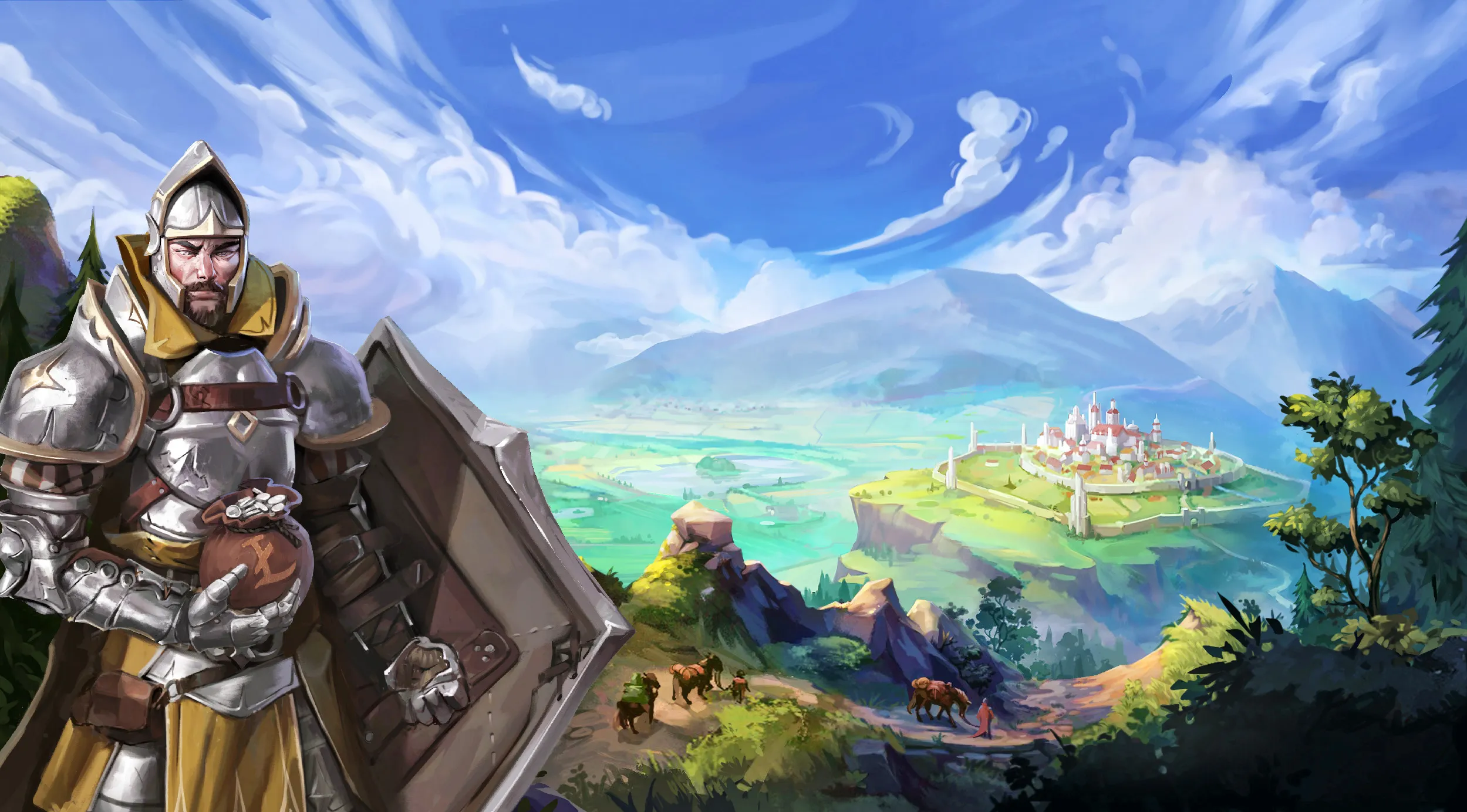
Stephan Vogler unravels CipSoft’s new blockchain game LiteBringer.
In September 2020 we’ve released a new game called LiteBringer. It’s an online game that’s running without a server and that’s practically impossible to shut down. We can’t even ban a player, which isn’t necessary in the first place as cheating or hacking is impossible anyway. You can download the PC client for free, but you have to pay for everything you do in the game, yet you still can earn money. It’s a game that’s rather hard to explain to people who aren’t familiar with cryptocurrencies. Understanding it might be worth it though, as we at CipSoft believe that the blockchain has the potential to revolutionize gaming.
Running an MMORPG for more than 20 years like we do with Tibia makes you realize certain things. For example: You can never produce enough content. Or: Balancing is hard. And here’s the lesson that ultimately led to the development of LiteBringer: Digital assets have real value. There are characters and items in Tibia that are worth several thousand Euros, and players are buying and selling them every day. Some people are even making a living out of it, but they have to use a somewhat risky black market to do so because we can’t be involved in this.
‘I’ll spare you the legal details but if CipSoft would function as a sort of escrow service for deals between players involving real money, we would basically need a banking license. The blockchain technology with its decentralized architecture fixes this. You can create a game where everything you’ve earned can be sold without the need for some kind of middleman.
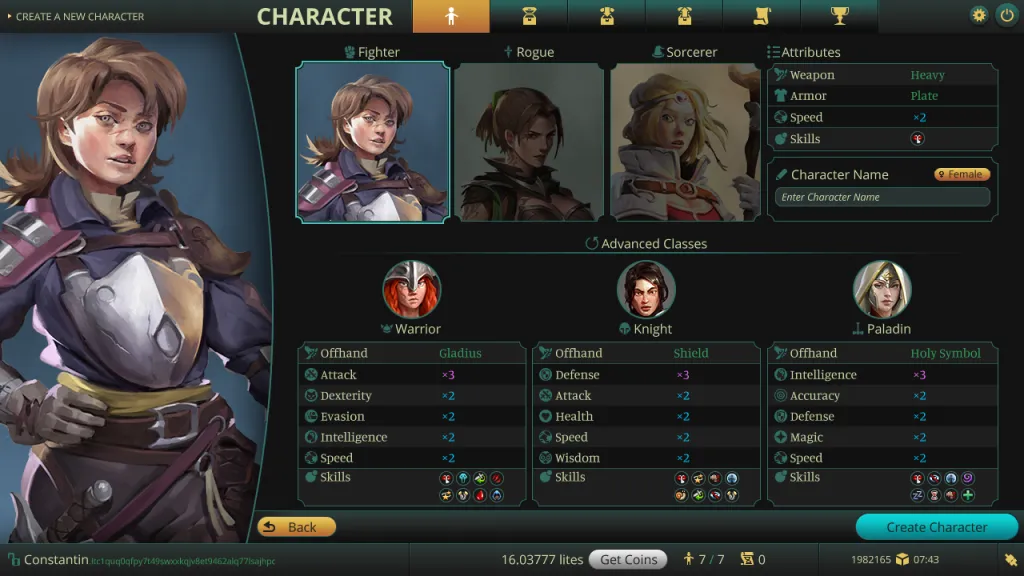
LiteBringer lets players level up fantasy characters like rogues and sorcerers that can be eventually promoted to a more powerful, advanced class.
Real Blockchain Gaming
LiteBringer is the first game that fully operates on the Litecoin blockchain, which means that every move in the game is a transaction on the blockchain. In the most basic of terms, a blockchain is a decentralized, public database that is used to record and verify transactions using a peer-to-peer network. What’s especially interesting in the context of gaming is the fact that it removes the infinite reproducibility from a digital asset. To be more specific: We, as the developer of LiteBringer can’t just create items or characters out of thin air, we have to earn them like everybody else. By using the blockchain, it is practically impossible to manipulate the game state. Every action is interpreted by all clients, so any asset obtained through manipulation simply doesn’t exist for anybody else. Even in a thousand years, every action of every player can still be interpreted, making the game practically immortal.
Creating a game where all of the game logic is on the blockchain demands a game design that is separated into single turns. So we asked ourselves what is the core of an RPG? The long answer is much more complex and nuanced of course, but we basically broke it down to this: You have characters that go on quests, you gather loot and experience, you can level up and progress.
That’s the basic concept of Tibia and most other RPGs. But while you’re doing all this in LiteBringer, your characters and items will get more and more valuable and can be traded anytime for Litecoins. This gives the whole game a feeling you don’t get in other games. LiteBringer is a trading simulation at its core with idle game and RPG elements. There are heroes and monsters, elements and effects, resources and rare weapons.
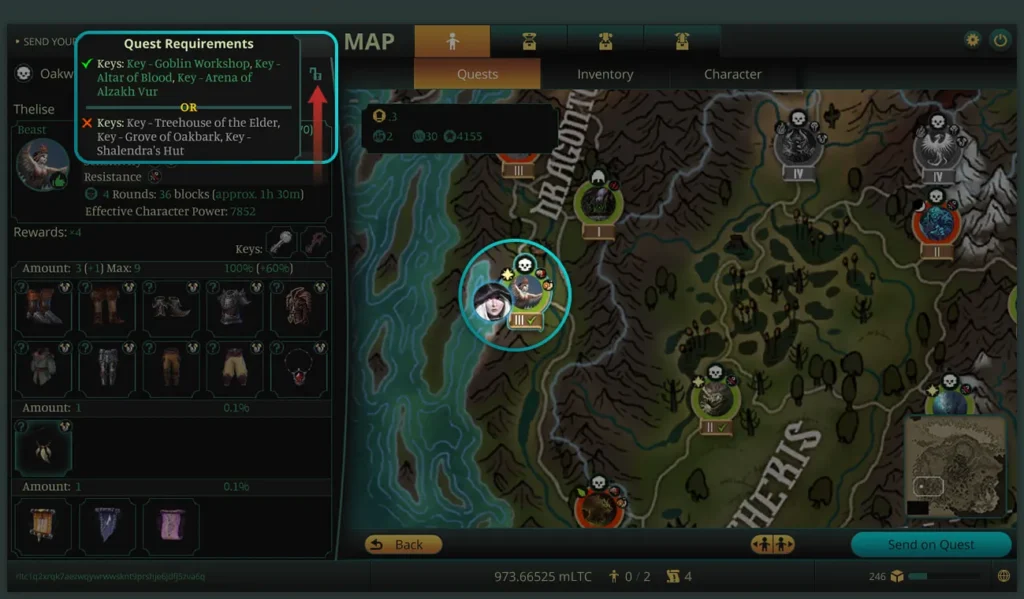
By specializing a hero in a specific way, players can tackle increasingly difficult and rewarding quests by simply selecting them from the map.
Developing on Litecoin
In 2015 when I realized the potential of the blockchain technology for online gaming, there weren’t that many cryptocurrencies around. So I laid all the groundwork for the game with Bitcoin in mind. In 2017, when CipSoft actually started to work on the game itself and the technology behind it, we realized that there’s a scaling issue. There’s only a very limited number of transactions you can have on Bitcoin, and if you want to create a game that’s based on a lot of transactions, you end up with very high fees. The most natural solution for us was to switch to Litecoin, Bitcoin’s little and faster brother. The transaction fees are very low and are guaranteed to stay low in the future, so it was a perfect fit for our game. Even though Litecoin was designed to be used as a currency, its scripting language allows small amounts of metadata to be stored on it. This 80-byte space is all we need to encode all relevant game operations. The game logic itself is written in C# where we’ve used openly available programming interfaces to receive and send blockchain transactions. The corresponding graphical client was created with Unity.
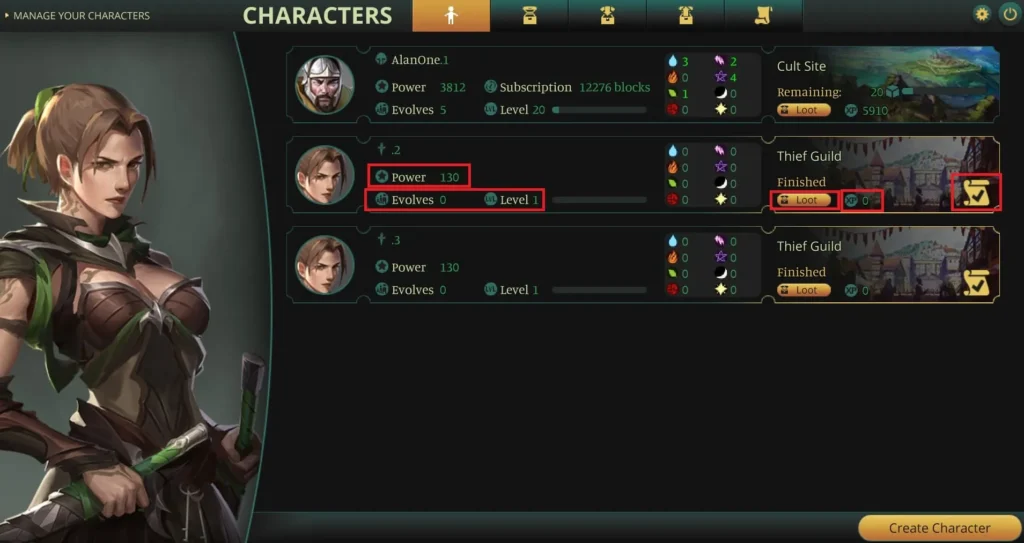
The marketplace is the central element of the game. Everything can be bought and sold: items, resources … and even characters.
While we’ve developed LiteBringer, games using the Ethereum blockchain became rather popular because their smart contract functionality fixes a lot of the problems that we had to solve the hard way. In hindsight we’re glad to have bet on Litecoin though because the recent spike in transaction fees on Ethereum would have instantly killed our game. The other thing is that games using Ethereum usually aren’t fully decentralized and ultimately don’t offer true ownership. Take Cryptokitties for example: The game uses so-called tokens for the creation of in-game assets and secures them with smart contracts on the Ethereum blockchain. But how the cats look and so on, is interpreted by a centralized server. If it has a malfunction or is permanently shut down, you couldn’t breed new kitties and the game wouldn’t work properly anymore.
Overcoming Unique Challenges
LiteBringer is fully decentralized. This comes with some advantages but also creates some unique challenges. If you make a mistake, you can’t just turn off the server, restore a backup and everything is fine. You have to be very careful and think very far ahead when implementing new features or assets, because once they are published you have very few options to correct anything. But that’s something we have a lot of experience with, thanks to Tibia. Another challenge is that every client has to know everything that is written in the blockchain up until now. If a client isn’t always up to date, it wouldn’t be possible to verify a trade offer for instance and items could be sold twice. The problem is that downloading the whole blockchain with all transactions and computing the current game state takes a very long time. After all, the Litecoin blockchain consists of more than 35 GB of data at the moment. To shorten the waiting time before starting the game, we do have some proxy servers that you can use. One of these tools is called the “preloaded blockchain”. It accelerates the synching with the game database. The “balance tracker” calculates the players’ funds by utilizing a block explorer. These services are completely optional though and can be deactivated in the settings of the game if you don’t mind the longer loading times.
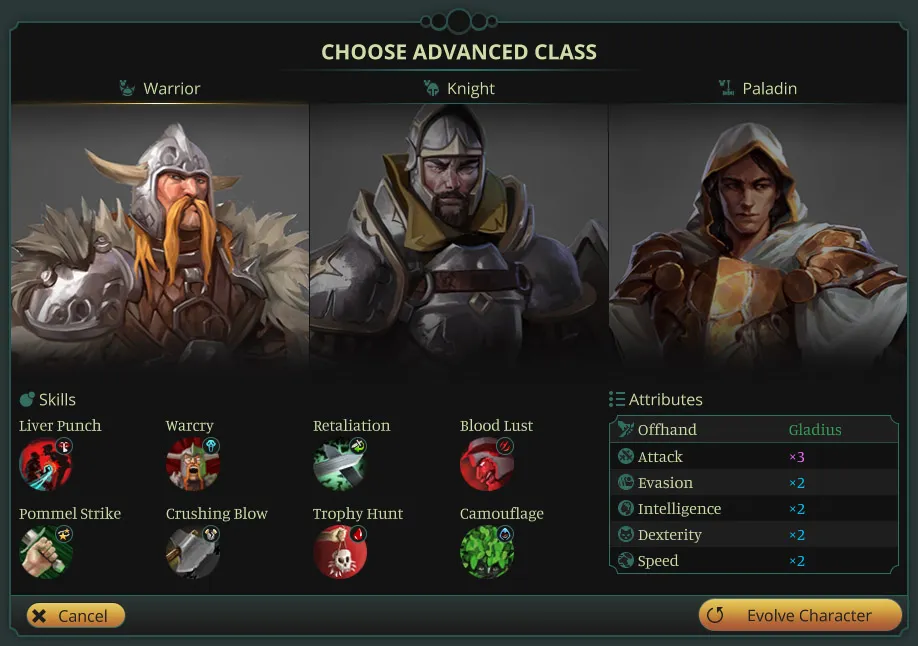
Skills, attributes, elements, effects … There are a ton of stats to consider when equipping and evolving a character in LiteBringer.
One week after its release, LiteBringer was one of the most successful decentralized gaming applications, and over 75 percent of all transactions in the Litecoin blockchain were caused by our game. 1,000 active players a day doesn’t seem much compared to traditional online games, and there are still a lot of problems that have to be solved before crypto games are reaching mass adoption. Nevertheless, we’re convinced that most games with desirable assets that can be transferred between players will use the blockchain technology in one way or the other in the future.
Stephan Vogler – Co-Founder & Managing Director
Stephan Vogler is one of the founders and managing directors of CipSoft. He stumbled upon cryptocurrencies in 2012, bought a couple of Bitcoins for ten Dollars each, and has been fascinated by the blockchain technology ever since.