

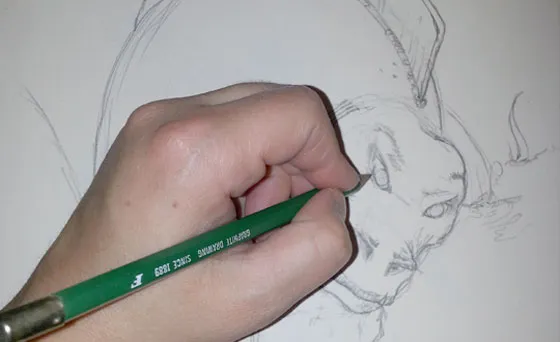
Drawing your character concept, like so many things involves a good eye, some talent, a pencil and a piece of paper (or a marker and a wall if you prefer). Anyone can draw, even you! Whether or not you are any good at it is a whole different story. There are many types of drawing, different complexities of drawing, and different styles. But truly, to draw there are only a few basic principles that should be followed.
The Vision of Drawing
Before you can draw, you need to be able to visualize what you are drawing. Many beginners will need to have the image in front of them, while more experienced artists can just imagine in their heads what they are going to draw. But no matter what, before you put a pencil to your paper, sit back and look or visualize what you are going to draw. Study its movement, how your object is connected, and its structure.
While you are doing this, you can start to feel an emotion; does this image make you happy, sad, angry? You can start to feel a bond with the image, which will help you to transfer your emotion to paper.
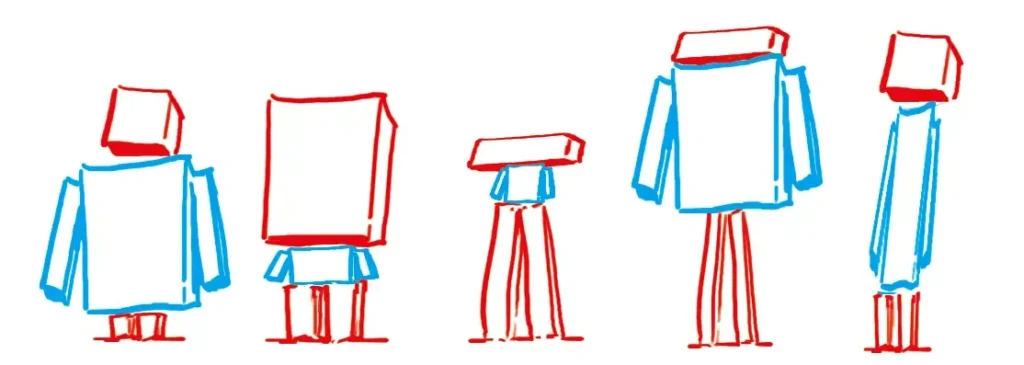
Everything Has Basic Shapes
No matter what it is that you are looking at to draw, it has a simple shape to it. Take a human head, for instance. Go and look in a mirror at yourself. Your head, from the front, is basically and upside-down egg. How about a an ornamental art frame? It’s just a rectangle with lots of details on the border.
When you are drawing living things, it’s easiest to understand their skeletal structure, musculature, and then the skin. As people, we only see the skin, so when we are beginning drawers, that’s all we draw. Artists, build from a frame (the skeleton), ad mass (the muscles), and then paint the skin. Now I’m not saying go and memorize all of the vertebrae in a spine or anything like that. What I mean is to understand how the skeleton allows the living thing to move, and draw lines of the skeleton to connect the joints.
Once you have built your skeleton, you can ad the muscles in. Take a look at your own arm. You have a smaller round-ish muscle at your shoulder, and oval muscle that goes down to just above the elbow, and then below your elbow you have a forearm muscle that leads into your hand. Great examples for looking at exaggerated muscles, are comic super heroes.

Drawing in the Skin
Drawing in the skin basically just means to draw what’s on the outside. If the fur you are drawing has patterns, draw in the patterns. Connect the muscles together as if you were wrapping cling wrap around them. Shade in the areas that would need to show depth.
These are the basic principles of drawing. Of course, drawing in details of an object, showing emotion, and movement are all a lot more complicated than what I have typed here, but this is a nice start to drawing.
How do you start your drawings?