

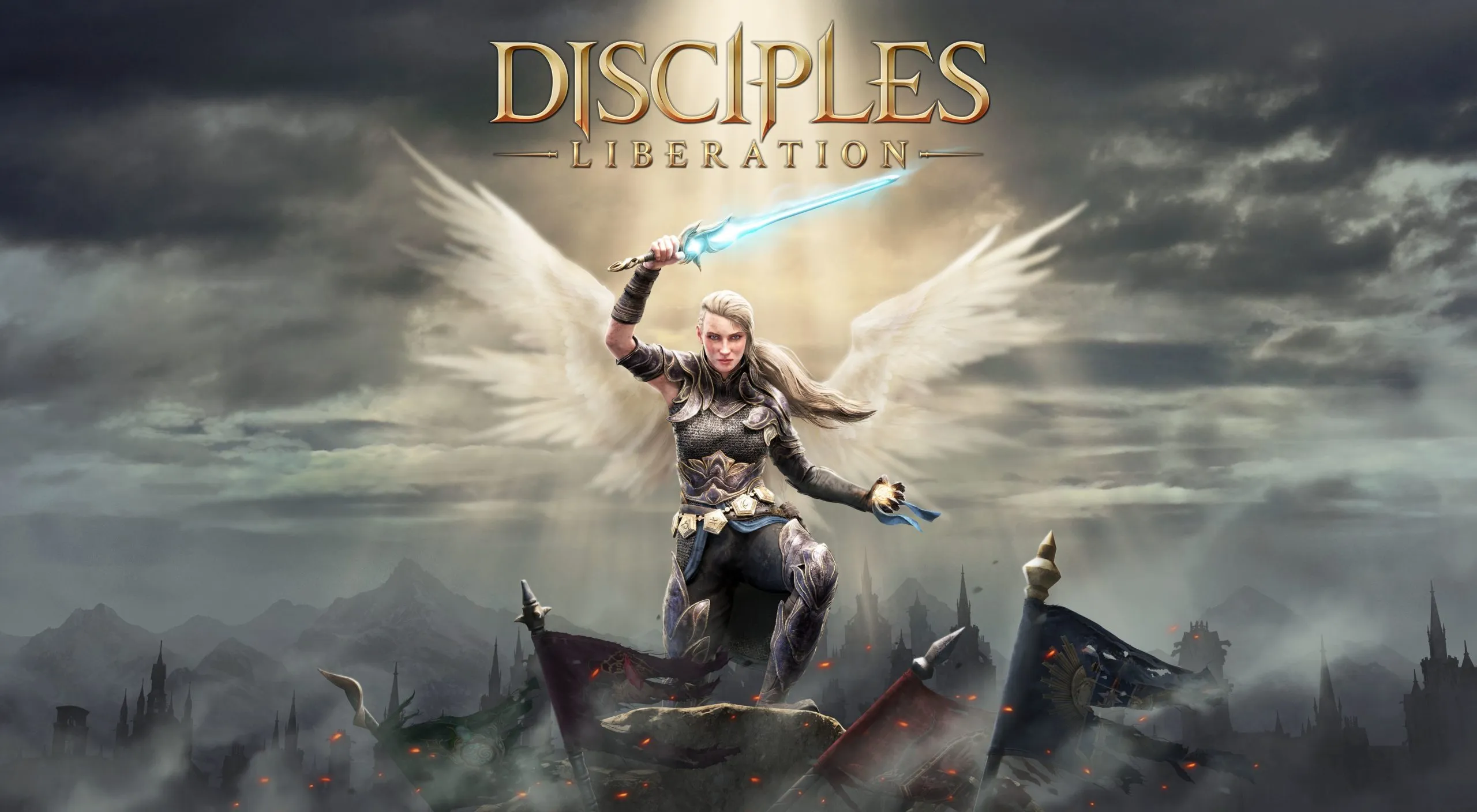
Canadian entertainment studio Frima combines role-playing and turn-based strategy in a rather unique way. Making Games looks behind the scenes!
On the occasion of Kalypso Media’s 15th anniversary (Tropico series, Sudden Strike series, Dungeons series), the German publisher is releasing a highlight, namely the new beginning of a classic of turn-based strategy. After Disciples 3: Renaissance, the series that started in 1999 took a longer break and now returns with Disciples: Liberation on October 21 on PS4/PS5, Xbox One/Series X|S and Windows-PC.
Disciples: Liberation is a mature, dark fantasy strategy RPG with turn-based combat. Players have to liberate the land of Nevendaar and uncover the endless stories hidden within this richly detailed world where every decision has a consequence, and every wrong move could be deadly.
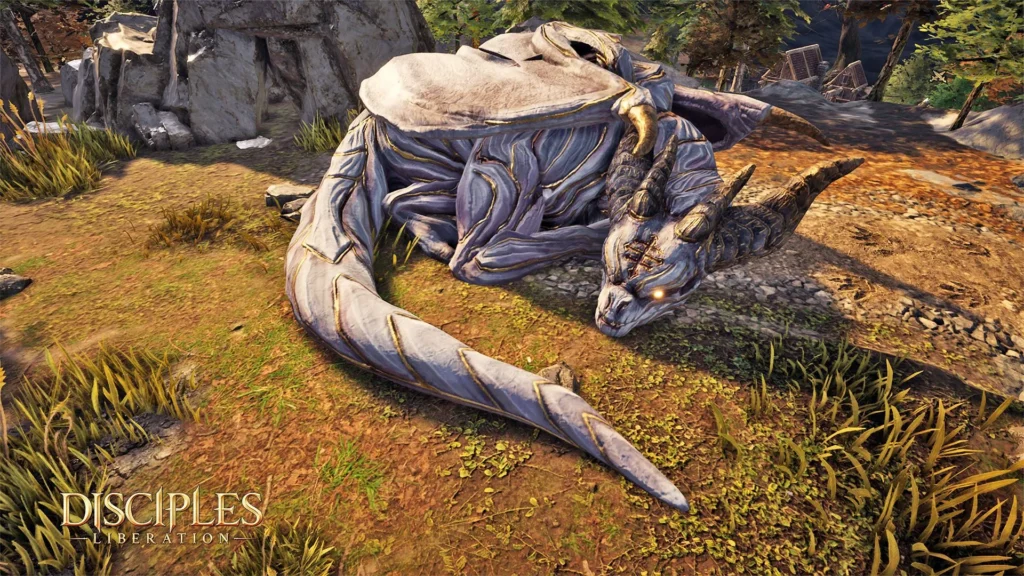
Disciples: Liberation is developed by the Quebec, Canada-based Frima Studio, which has also been around since 2003 and has since released numerous games for PC, consoles, smartphones and social media platforms. Frima’s best-known games include the Zombie Tycoon series (since 2009), Chariot (2014) and the VR title Fated (2016). In addition, Frima Studio have produced animations for film and television.
Disciples: Liberation is certainly one of the biggest and most important game projects for Frima. Frima promises over 80 hours of gameplay for the single-player campaign with more than 270 quests and objectives and five different endings.
Although Frima Studio has been incredibly busy so close to release, they took the time to talk to Making Games about the development of Disciples: Liberation.
Making Games: Would you please introduce yourself and your team?
Louis Lamarche: I am Louis Lamarche, Studio Creative Director at Frima, the developers of Disciples: Liberation. I have been officially involved in making games for 24 years and have unofficially been designing them since I was eight years old. Throughout my career, I have developed titles on all platforms, from console to digital and mobile titles at Ubisoft and WB Games just to name a few.
Eric Latouche is our Game/systems Designer, he has also been in the industry for more than 15 years. He has worked on multiple RPGs and Action titles over the years and has been at Frima for more than ten years. Founded in 2003, Frima is an entertainment studio with extensive transmedia expertise that strives to inspire tomorrow’s digital experiences. We foster bold creativity in the development of digital entertainment experiences.
The project started in February 2020 giving us a production of 20 months before the game launch. The team composition moved a lot depending on the production needs but, at our peak, we reached about 40 people on the team. Overall, however, our core team was composed of about 20 skilled and passionate developers. The core team is composed of industry veterans that have been working on AAA titles from Assassins Creed and Tom Clancy to more indie titles like Journey to the Savage Planet and Chariot.
Disciples: Liberation is a kind of reboot of the series after a break of more than ten years. What was your approach to not scare away the fans, but at the same time, be interesting for new players?
Louis Lamarche: We see it as a new beginning for the franchise rather than a reboot. Modernising a title is always the most complex task a development team takes on.
It is always a challenge to please fans while opening up the brand to a new audience. The 1st thing for us was to respect what had come before and built upon the legacy of Disciples. The world, its lore and its character were our primary focus. Building on the Dark Fantasy offered by the world of Nevendaar and giving the opportunity for players to engage with it based on their moral compass, or should I say the moral compass of their current game. There are multiple ways to engage with the world and its characters.
Naturally, the challenge to introduce newcomers to the world of Nevendaar was important, as we needed to introduce years of Disciples where Liberation could be an introduction to the brand as much as a continuation for fans.
How did you go about the game design and quest design? What did you want to focus on, and how did you want to stand out from the numerous competitors in the genre?
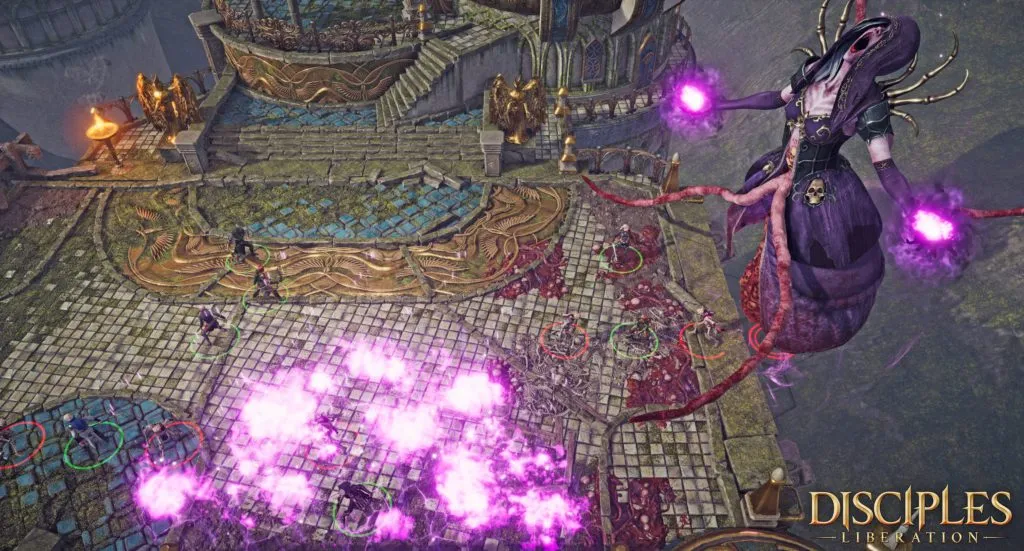
Eric Latouche: As we designed the game, we kept focusing on accessibility, combat and player’s choices. By accessibility, we mean that the game was meant to be played on consoles with a controller from the start, but there’s more to it. Tactical games are popular, but they usually come with complex systems and we tried to tone that down a bit with Disciples: Liberation. For instance, a colored action point is a game mechanic that’s easy to understand and visualize, offering various possibilities to players. Tier 1 units have two active abilities and 1 backline ability, which is fairly manageable. Passive abilities are introduced with Tier 2 units and ultimate abilities a bit further with Companions. By having fewer abilities per unit, players can learn them more easily and focus on placement, which is an important part of combat in Disciples: Liberation. The flanking mechanic is a good example of rewarding players for their careful placement.
Almost all the elements in the game are familiar from other games, but we find your combination very interesting. How difficult was it here to balance everything well, make it all fit together and be fun?
Eric Latouche: First of all, thank you for finding the combination of elements in Disciples: Liberation interesting. Even though strategy RPGs are quite complex, we tried to keep every aspect of the game accessible as well as rewarding and it helps us balance the whole game. Many elements of the game are graded in Tier and gaining access to the next Tier of these elements requires the player to upgrade their Castle. For example, to gain access to Tier 2 units, mercenaries, spells and faction buildings, the Castle needs to be Tier 2.
Another element that helps us keep the whole game balanced is the Leadership statistic. Leadership defines how many units the player can bring to battle and we kept the increment of this statistic very limited. Only the Castle Tier and Avyanna’s level increase the Leadership. In a nutshell, we introduced tactical elements gradually, allowing players to have fun and master them. Then it’s about at that time that new elements are added for the player to discover. It’s not just the new additions but the combination of known elements with the new ones that make the experience fun and challenging with players having to figure out new unit synergies along the way!
Turn-based combat is part of the DNA of the Disciples series, but it’s old-school these days. Why did you stick with it and how do you make it feel modern?
Eric Latouche: I wouldn’t say old-school per se because there are a lot of turn-based franchises that have new titles out there right now that are successful and quite popular. There’s an audience for turn-based combat and it is part of the DNA of Disciples as you said, so we couldn’t imagine Disciples: Liberation without it We were also inspired by classical pen & paper and tabletop RPGs, which are turn-based games as well when you think about it. As a big fan of these games, I can say that since the release of D&D 5th edition in 2014, tabletop RPGs have never been so accessible. Rules and systems were adjusted to cater to a seasoned as well as a new audience and that’s definitely what we kept in mind when designing the game.
You emphasize that you can greatly influence the story through your decisions. Hand on heart, how branching is the plot really and how did you go about developing it. How difficult was it?
Louis Lamarche: We tried to allow the player to make a few choices in every conversation with varying degrees of impact, some of which may not seem to have made a difference but that will probably come back at you later on in the game. That NPC you insulted could potentially play a larger role in the big picture, and he’s not happy about how you treated him and may fight you instead of just talking.
Your choices will also impact your standing with the different factions and depending on how they view you, it will make certain regions easier to get through than others. NPCs will react differently to you, will they be friends, foe or somewhere in between? Quests will also unveil accordingly to your factions’ allegiances, highlighting the various sides of the story.
A big part of the branching is also related to your companions who will be impacted by the choices you make and will react to them. The difficulty of making that much branching in our story was to track every choice you’ve made and making sure that when you meet an NPC again, what he says and how he treats you makes sense based on your previous interactions.
All-important characters were made as an integral part of the story from the get-go. Their profiles, their motivations were mapped in the story. What was their role and what were the major events they were part of? Can this pave the way to how the players’ dealings with them would impact the story and balance between the factions?
The secondary characters were part of the quests’ creation, but we required that their role in the bigger picture be justified. This allowed us to assess how their personality, motivations and relationships with other characters would unveil along with the quests and if they would become recurring characters and if they would provide a great feel of narrative continuity.
Finally, depending on how you play out your journey as Avyanna, you will discover one of the five different endings Disciples: Liberation has to offer.
How do you write in a way that makes you feel for the characters? What did you draw inspiration from for the story and what were your goals?
Louis Lamarche: It may seem weird/counter-productive/unusual, but the struggle was finding ways to NOT feel for the characters. in the world of Disciples, mortals serve their gods and suffer for them. It is a world of tragedy fuelled by devotion – and vice versa. If we felt for our characters, we would want to protect them. So, whenever possible, we tried to just stay out of their way and let them tell their own story.
We were definitely inspired by the Disciples games that came before. Outside of that – please don’t hate us for the name dropping – but the story also seemed to be influenced by the fact that our narrative director, James Mittag, was reading Carl Jung, Martin Heidegger and Friedrich Nietzsche at the time, which is a great way to make your own writing seem not-good-enough, as he puts it. 🙂
Our goals were just to honor three things: the brand and its games, the characters in this new story, and the choices the player makes as they set out to change the world.
Which character is your favorite?
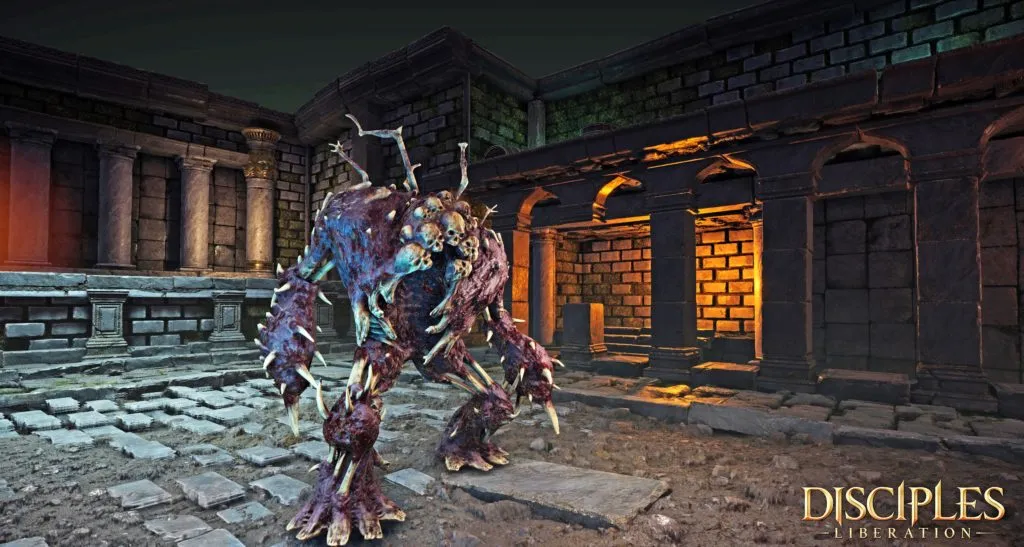
Eric Latouche: My favorite companion is Illmeren and my favorite unit is the Sundancer. Why these two units? Illmeren can heal allies around her while attacking enemies at distance, which is quite powerful. The Sundancer is visually spectacular and she’s quite versatile too. Her abilities are a mix of melee/range fused with fire and ice magic. She can strike 4 times with her flaming sword, gaining buffs and inflicting debuffs on her enemies with each hit and she can freeze an enemy in place at distance.
What feature or detail in the game are you most proud of and why?
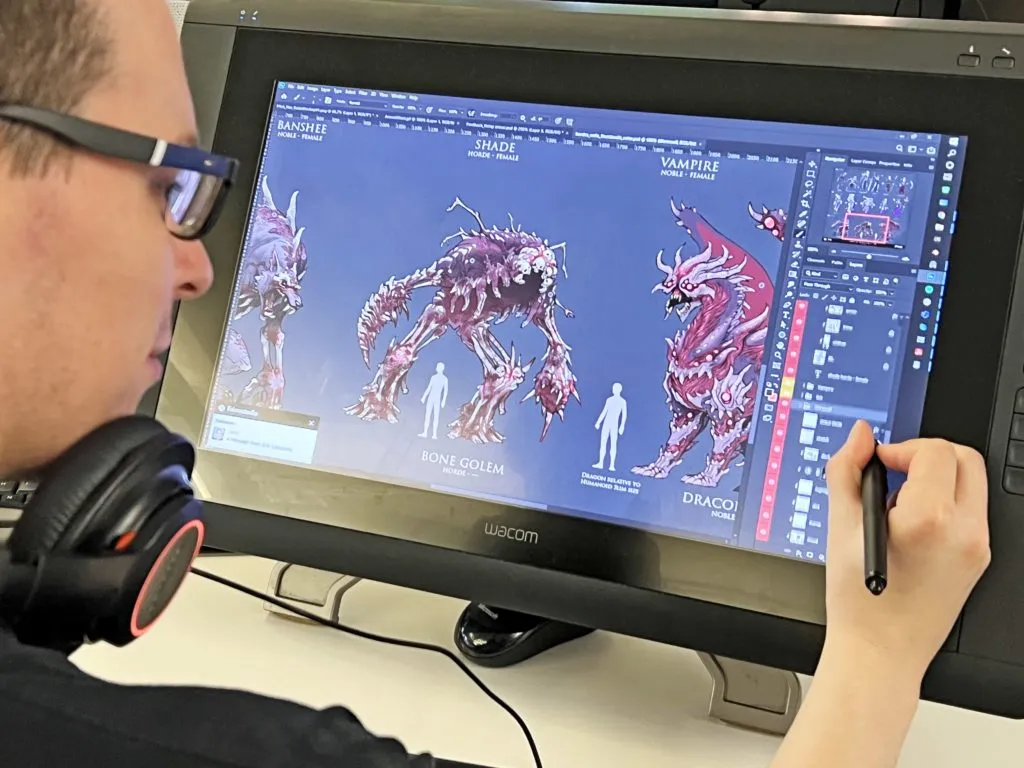
Eric Latouche: That’s a good one. If I had to pick one thing, even though it’s a smaller feature compared to others, that would be the Graveyard. When units die in combat, they go to the Graveyard. Once in the Graveyard, these units can be used as resources for spells, unit abilities and skills. For example, to cast the Summon Bone Golem spell, 3 units must be removed from the Graveyard. I think it’s a cool feature that is not used that much at the beginning of the game, but a bit more as you progress, especially if your favorite faction is the Undead Hordes.
The gritty art style is undoubtedly one of the strengths of your game. What inspired you? How did you manage to make your game look quite unique?
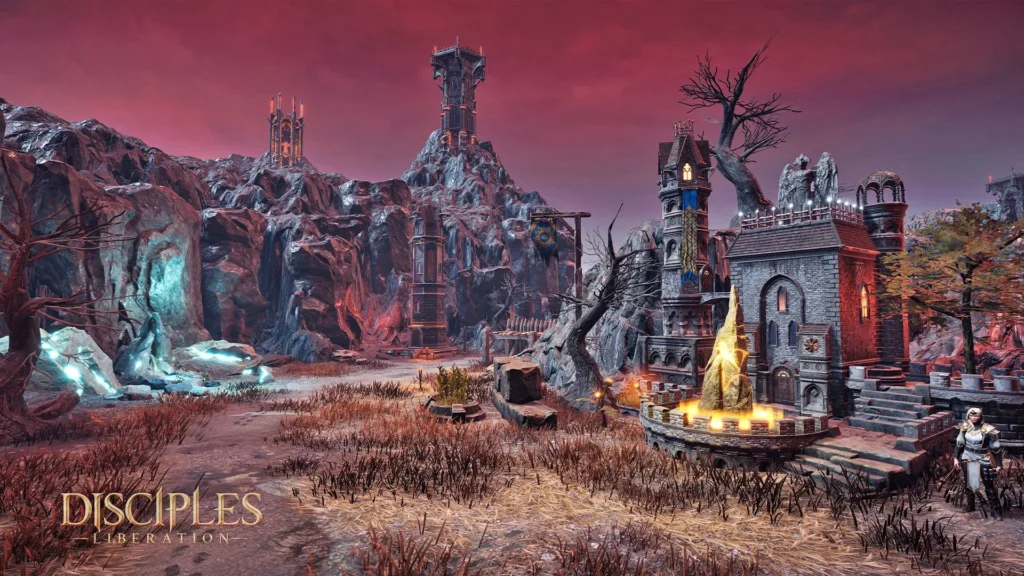
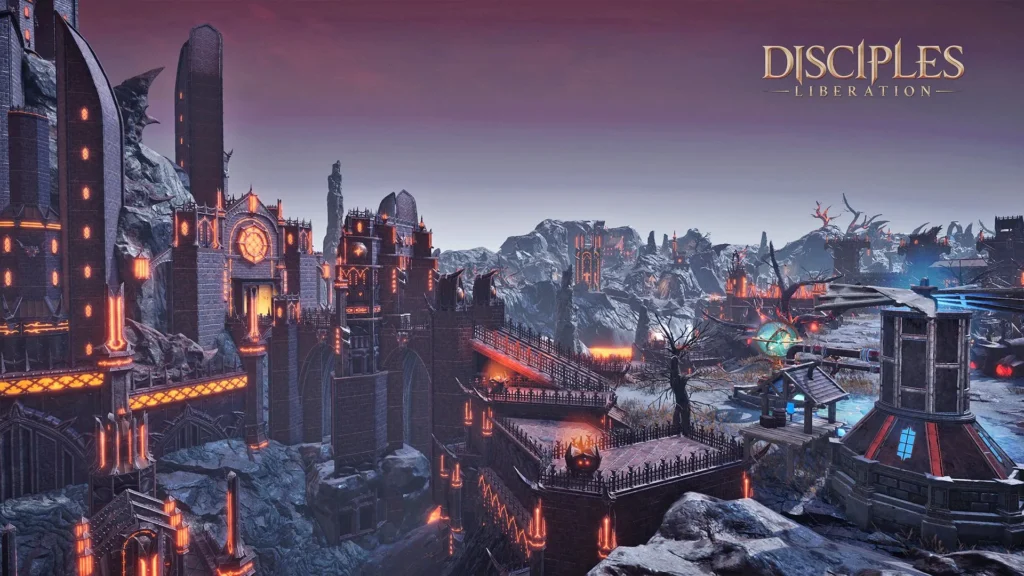
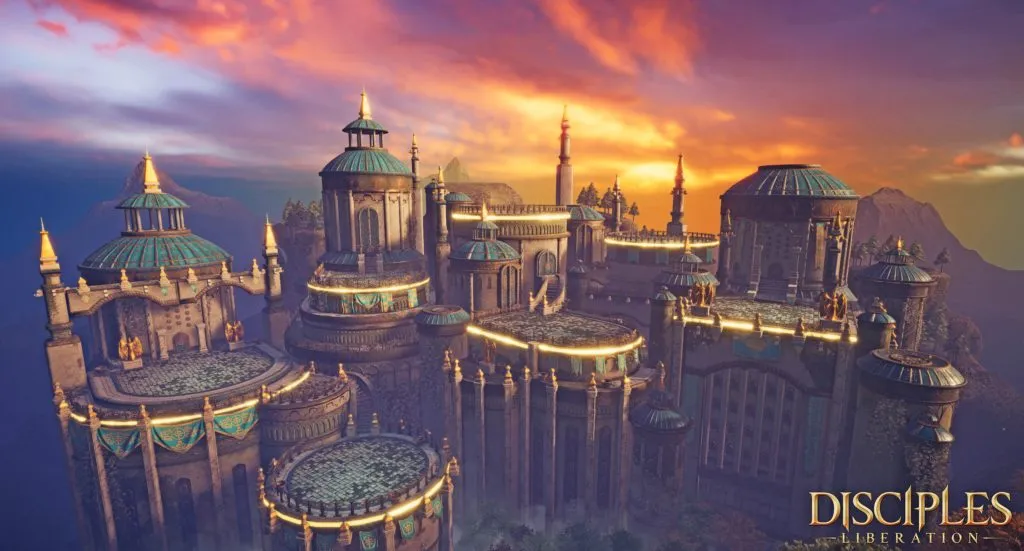
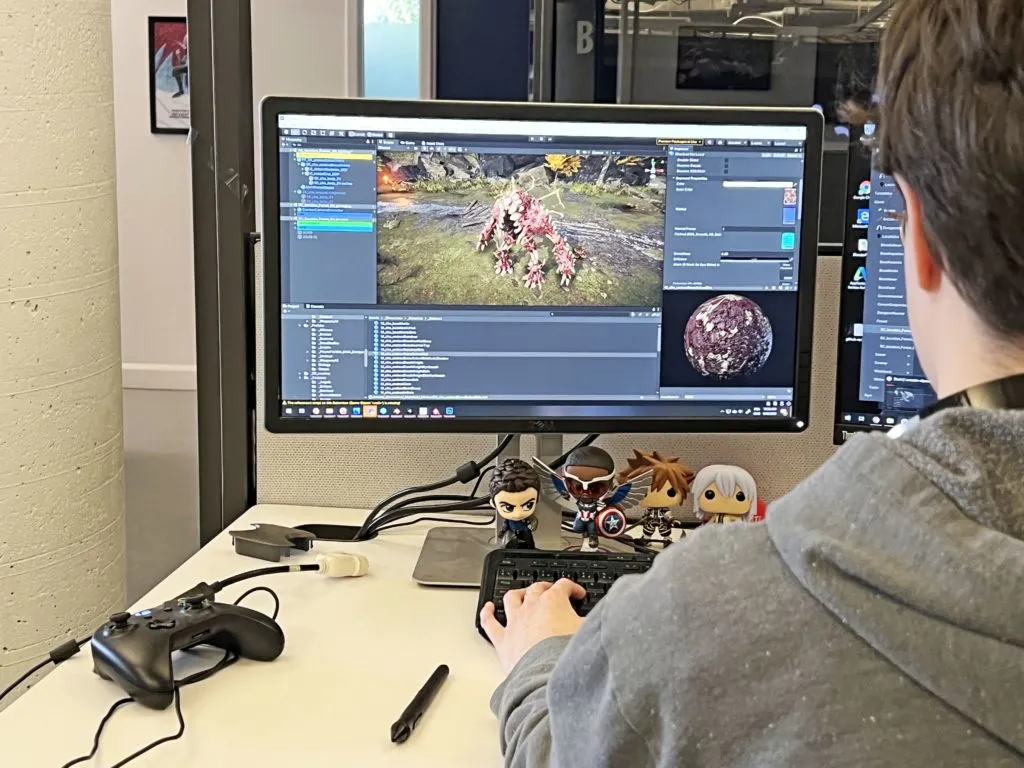
Jean-Michel Morency: Multiple elements impacted the Art Direction in Disciples: Liberation. The primary reason is that we wanted to diversify the player experience of our open world exploration by offering more visual variety as the player would travel through Nevendaar. Dark & Gothic being primary themes are present across the land and some regions will be much more on par with past titles.
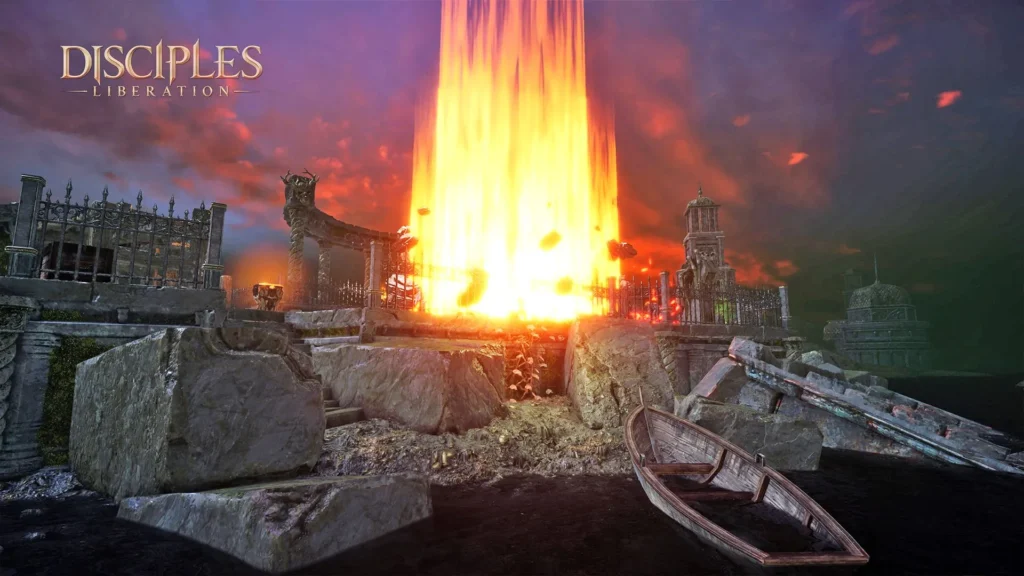
Darker, more gritty environments filled with death and decay are amongst the artistic elements that players will explore as they experience the story of Disciples: Liberation.
We also made stylistic choices based on readability and accessibility. For example, we colour-coded the factions to avoid players confusion, which made the game a bit more colorful than the original but easier to play for a new audience. We really wanted to make the game approachable for the new beginning of the franchise as well as the new platforms it will be playable on.
There is also the factor of technology 10 years past the last Disciples. UHD, HDR, the power of shaders with modern GPUs give us the ability to drive a high level of detail beyond past titles.
But rest assured, the story of Disciples: Liberation is darker than anything that came before. There’s some really disturbing stuff in there. The art and how it supports the story will really creep up on you.
What engine do you use and why?
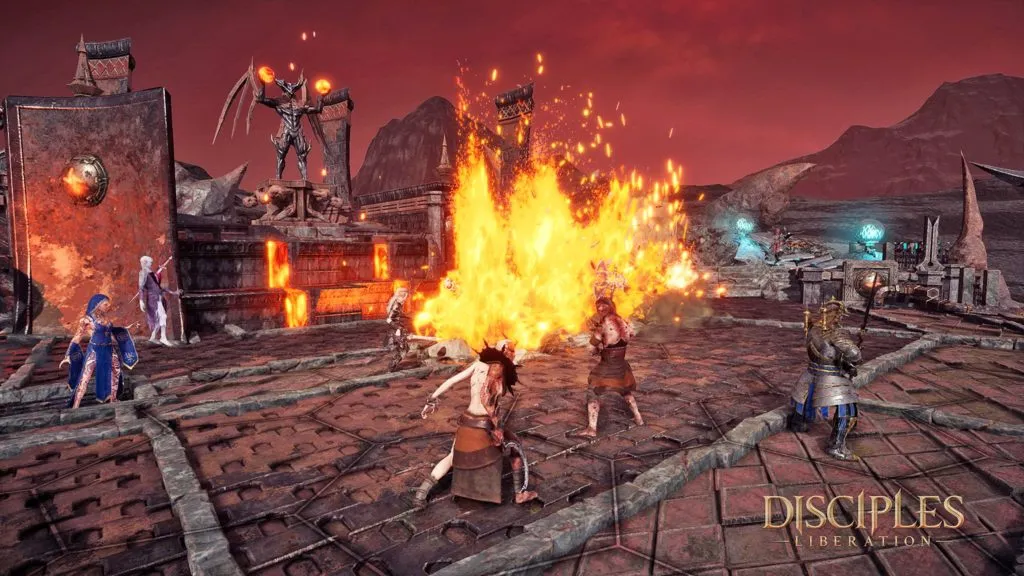
Sébastien Demers-Tremblay: Disciples: Liberation was developed in the Unity Engine. As to why it is quite simple. When we started working on Disciples: Liberation, we had a lot more experience at Frima working in Unity than any other engine, like Unreal Engine for example. The expertise we had with Unity, really helped us to develop efficient tools for creating abilities, quests, encounters and managing dialogues for example.
What did you have the most difficulties with during development and how did you overcome them?
Sébastien Demers-Tremblay: One of the big challenges we faced was definitely developing the combat feature, especially creating over 300 different abilities for all the units in the game. We didn’t have the luxury to code them one by one so our goal was to create a tool that would allow the designers to create those abilities by themselves. We then spent a lot of time coding a bunch of “building blocks” that would be used to define what the result of the ability would be. We wanted to empower our team to be creative within the system and have fun with it.
You are releasing your game on many platforms. How involved was that? Do you have any tips for our readers in this regard?
Sébastien Demers-Tremblay: Making a game for so many platforms did require time, effort and a lot of dedication. The tech and QA teams worked tirelessly to make sure the game ran smoothly on all platforms while the design team made sure the game could be enjoyed with a variety of input types. In the end, our goal was for the game to reach as many people as possible. We believe we achieved that. So, our tip for players is to play the game on the platform they love and they’ll have a great experience!
Controller support for a dark fantasy strategy RPG like Disciples: Liberation was a primary focus for us as we wanted to make it as accessible to play as with a Mouse and Keyboard.
What else would you like to tell our readers?
Louis Lamarche: Disciples: Liberation is not a sequel, and not a direct follow up of Disciples II, or Disciples III, it’s a fresh new start in the franchise. Even though previous entries in the series are great and among their favorite games for some players, you don’t need to play them to enjoy Disciples: Liberation. Of course, there are references to the past games in some quests, the lore, items, units and the factions, but this is the journey of Avyanna and how she will shape the future of Nevendaar is up to you, the player.
We put a lot of effort into making the game engaging and accessible while offering a lot of options for the player to try. We had a lot of fun developing Disciples: Liberation and we really hope that both newcomers and long-time fans of the franchise will enjoy their journey across Nevendaar and might be able to explore new facets of this complex universe.

Louis Lamarche
Studio Creative Director
Louis has been officially involved in making games for 25 years and has unofficially been designing them since he was 8 years old. Before joining Frima, Louis held positions as Producer at Ubisoft, Creative Director at both Behaviour Interactive and Warner Bros. as well as Development & Creative Director for kicking off new game content.

Eric Latouche
Game Designer
Eric has 14 years of experience in the games industry. He started his career in 2005 as a QA technician at Humagade. He became Game Designer in November 2006 and joined Frima over the acquisition of Humagade in 2008. Since then, he has worked on the development of multiple games across many genres and platforms.

Jean-Michel Morency
Senior Concept Artist & Assistant Art Director
Jean-Michel has over a decade of industry experience to his name. He has occupied a leadership role within several art teams at Frima due to his innate creativity and expertise in animation, the design and creation of environments, characters, items and interfaces.

Sébastien Demers-Tremblay
Technical Director
Sébastien has 12+ years of experience as a developer in the games industry. He worked on more than 15 different game titles for Disney, Dreamworks, Warner Brothers and Ubisoft. Sebastien has been at Frima since 2014 and is our technical director and lead programmer on Disciples: Liberation.