

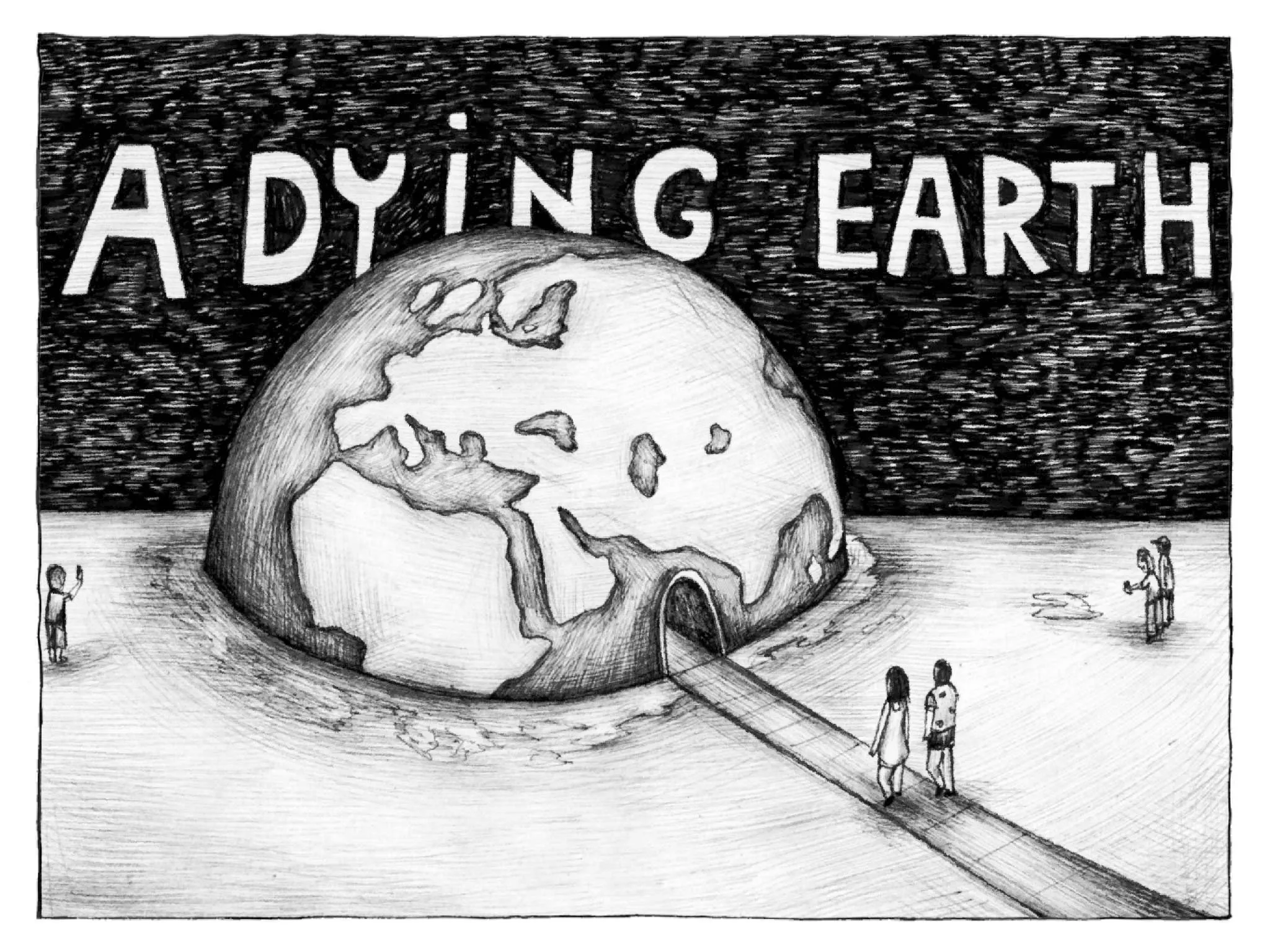
To tell the story about the alienation of modern living, comic artist and game creator Ida Hartmann had to look deep into herself.
When I started working on the interactive graphic novel ‘Stilstand’, I wanted it to be a game about alternative realities. Or something in space. You know, craft your own spaceship! Travel to other planets! Or become a vampire in a fantastical landscape in something that rhymes with … San Andreas. I’d played them all, I’d seen them all. But as a small indie studio with a very limited budget – and for me as an artist who had mostly done auto-biographical comics about being neurotic in Copenhagen – it seemed like the most incomprehensible, impossible game plan to have. Fortunately, in recent years, there’s been a growing tendency in creating narrative-driven, artistic, and more mundane indie games revolving around more down-to-earth themes and characters. As someone who didn’t see themselves as a ‘Gamer’, I always longed for games to be more than a game, and why shouldn’t they be? I mean, games have all the narrative benefits that a viewer must want: The possibility to create an immersive universe, where you get to play a part yourself. In this digital age – what more could you wish for?
Literally speaking, I wanted to come down to earth, and bring forward a reality that would be so authentic that it might not be pleasant or entertaining for everyone. I wanted to figure out how to design and create a world that touched on some themes and aesthetics that you usually don’t see in games. In this article I will describe some of the thoughts I had and choices I made when I worked with danish indie studio, Niila Games, creating ‘Stilstand’. How do you make a game that depicts dark feelings? And in doing so, how do you make it a game that people still want to play? And what even classifies as a game?
Woman in the Mirror
… come down to earth. Ida, stop with the sci-fi and Buffy the Vampire Slayer-homage. I look at myself in the mirror on a vile winter’s day. Tired, sleepless eyes, a bittersweet frown. Oh no .. Am I really going to make a game about myself and the most painful time of my life ? Oh … yes, it’s happening. Why do I do this to myself? Having kept most things secret for almost 30 years, mostly writing lonely diary entries and talking to friends – but only when the wars were over, I think it’s time, I want to tell the story. Almost everyone I know suffers from various degrees of different mental issues, struggling to get their life on track in a world where everything moves fast and where you are supposed to be your best self. It’s sometimes suffocating and I am of the belief that if I tell about my own not-that-special downfall and experienced Stilstand, then someone might relate – or might even feel less alone. This is my goal, this is why I make this game.
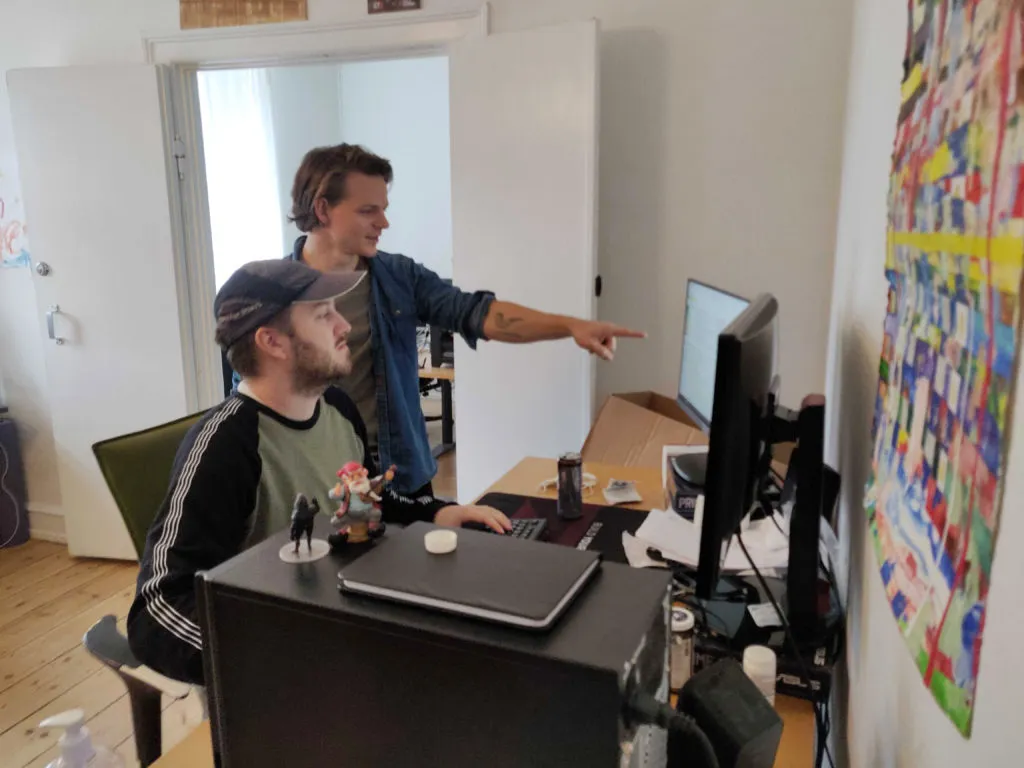
In the beginning it was difficult to get to the core of what it was all about, because it is certainly not easy to make a narrative that is this close to oneself. I started the process by frantically reading old diaries from my not so roaring twenties, just thrashing through many years of my own life, collecting fragments of it, trying to make a structure of some kind. I felt so embarrassed when I had to read my poetic pain-documents out loud to the boys at Niila Games, it was way so unbearably intimate. At the same time I had this overwhelming feeling that it had to be that way – that if this project should be able to depict a real feeling, a real life, then I for a start needed to be real. The more I started to talk out loud, the easier it became.
The first couple of months of the process I mostly went on long walks in the cemetery or by a nearby lake and thought and thought and thought about how I should tell this story – trying to insert myself in a previous experienced pain like a struggling (self-proclaimed) artist, speaking the truth from her pain of being a human being. Sigh .. It became a story with around ten chapters, each with a theme – loneliness, anxiety, depression or failed love, about working life, the disappointing student job, the failed family dinner. It was a huge game with no narrative structure, but more some sort of crazy, incoherent mapping of my own life. The question was how I could boil it down to something that was cohesive, something that would make sense to someone from the outside, and not create a direct channel into my most intimate personal life.
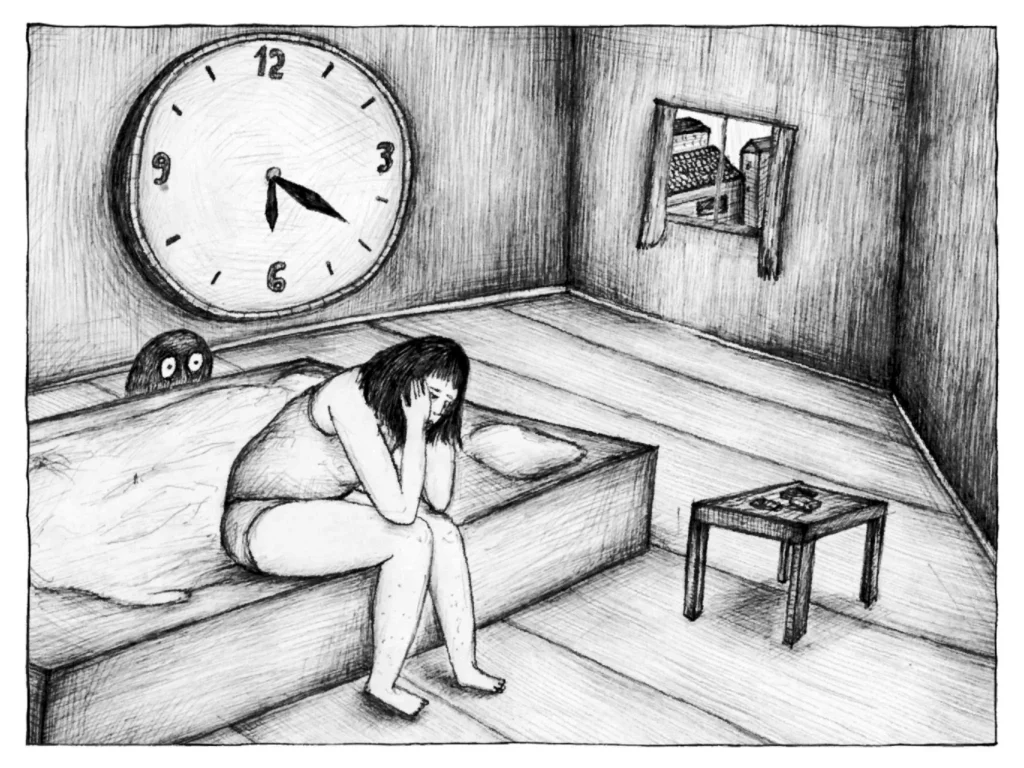
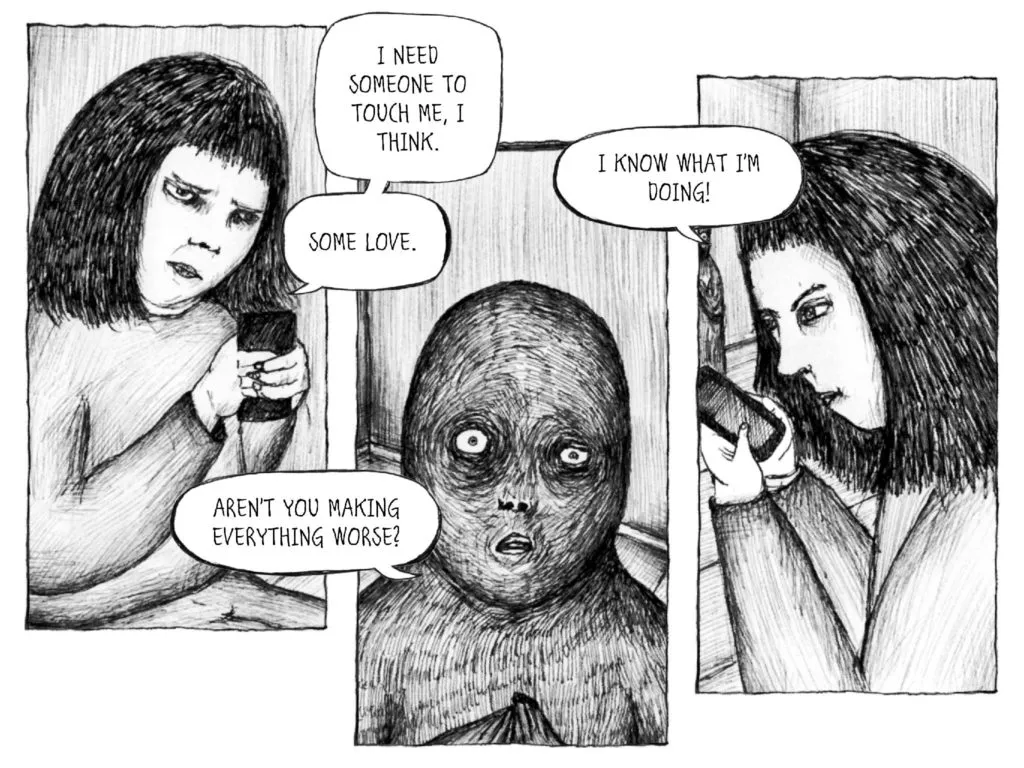
Finally I decided to increase the massive storyline to this: In ‘Stilstand’ you follow a young woman as she tries to stay afloat in Copenhagen during an extremely hot summer riddled with anxiety and loneliness. Because of the dark themes, I decided to write in a friendly shadow monster who appears alongside the heat and lives with her in the empty apartment, serving the role as the comic relief and funny sidekick. She struggles to exceed the high expectations she has to herself, while the weird creature gives her something to bounce her feelings up against, making sure the story doesn’t get too depressing and dark, but instead constantly balances the difficult themes of the story. Humour is one of my most important tools in writing and drawing this story, something it needed to create the right empathy and goodwill for the girl’s chaotic lifestyle.
The game ended up not being a 1:1 version of my own life, but a fictionalization made from a autobiographical foundation. The girl isn’t me – but she comes from me. Her apartment isn’t mine – but it’s a fusion of all the apartments I lived in, what they felt like living in. Adding fantastical elements and humoristic situations was the only way I could make this story – removing myself from it, distancing myself, but still make the thoughts and feelings behind every single thing authentic and real. I believe that the most beautiful and touching artworks are the ones made straight from the heart and soul. You can always see those artworks from miles away. Ironically the vulnerability of it all makes the imprint that much stronger.
Enter the Darkness
‘Stilstand’ is a hand-drawn, black and white interactive graphic novel with a linear story. The story is formed as a comic, where you tap through the panels, where some have small interactions while others have animations, or sometimes followed by minor quirky mini-games. From the very beginning I have been asked: “Why not just make a comic?”. A question that has always provoked me, but also kept me on my marks. The difference between making a physical, static comic book and making a game is the uniqueness, nerve and talent (to quote RuPaul) of the interactive medium.
When creating a story about a person who can’t move and who mostly stays in bed in the safe confinement of her dodgy apartment, the interactivity and dynamics of the game medium helps create multiple layer of emotion and empathy, another feeling of progress and movement, that I couldn’t achieve in the same way making a comic. At the same time I was interested in pushing the limits for what a game can be – both artistically and thematically. Can you even make a comic come to life? Can a game also be an artwork? And in doing so – will I be able to make a game version of my own crisis?
It wasn’t just about creating a “game design of feelings” but also to make the other parts of the universe support the overall narrative, which meant that the aesthetics and sound design also had to touch base with the sensitiveness of the narrative.
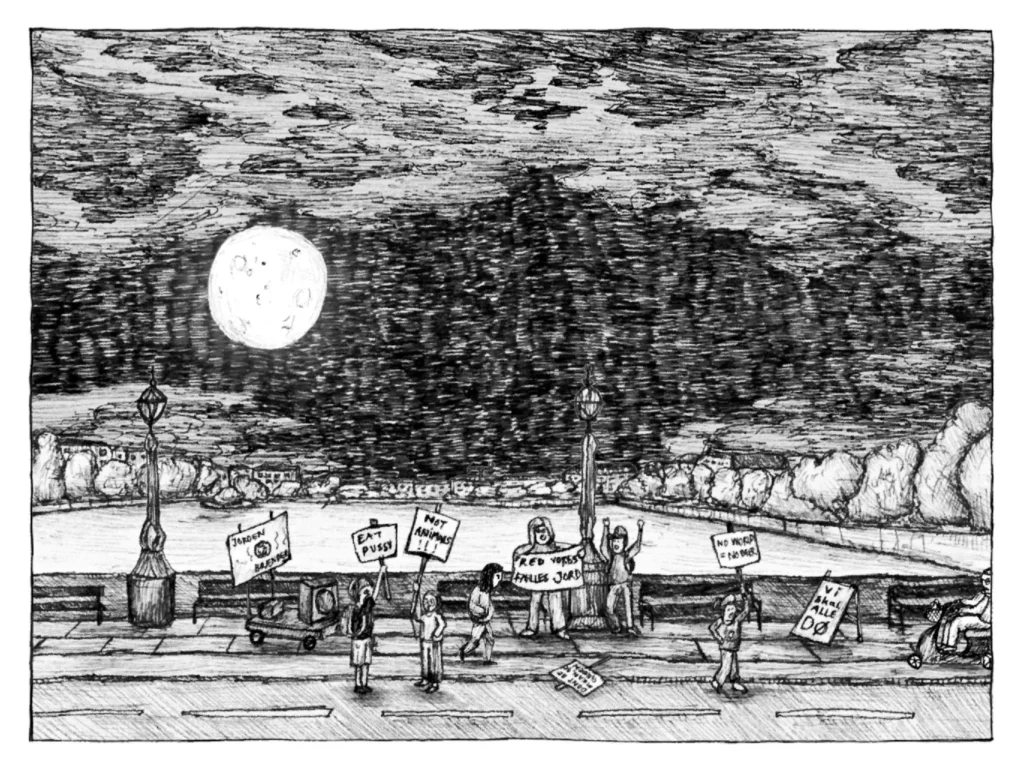
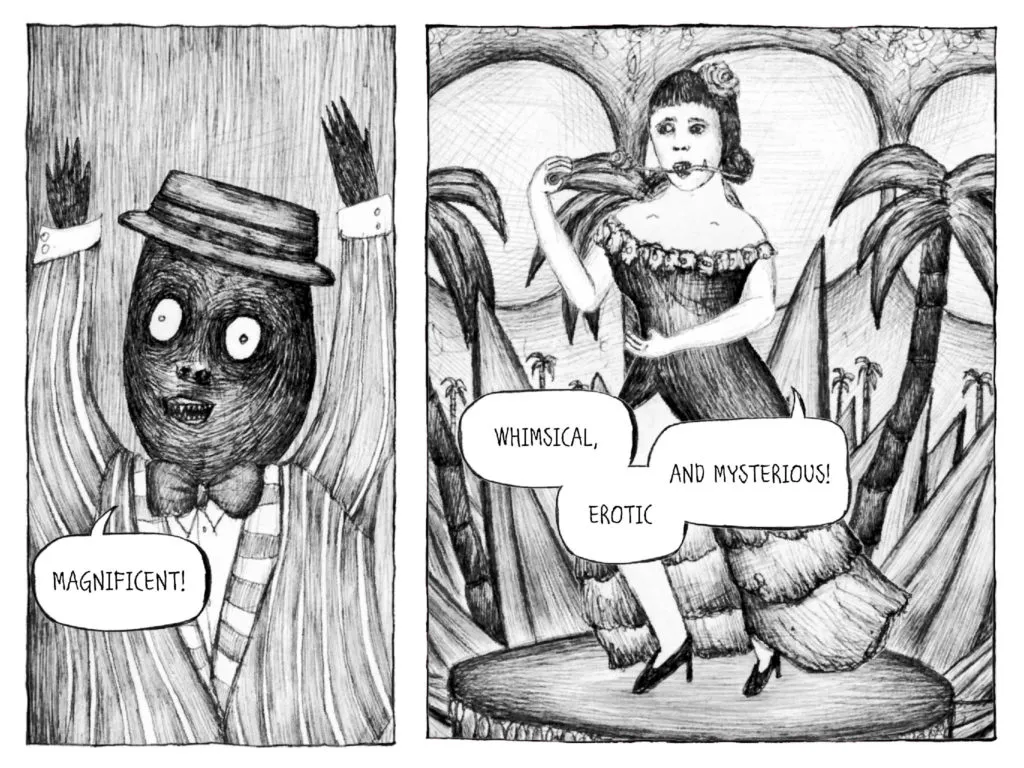
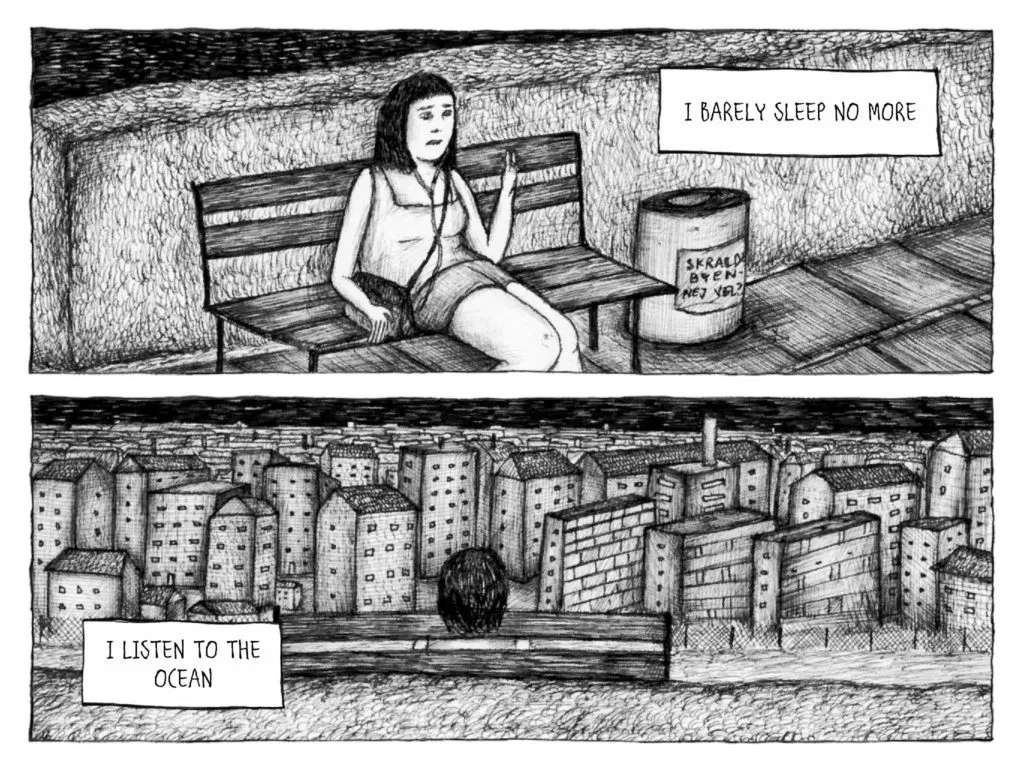
My drawing style has always been imperfect and grotesque, and I drew all the visuals in ‘Stilstand’ by hand, not correcting when I made mistakes, only to preserve some of the inner chaos and nightmare-esque feel to the style. The main character looks a bit different in every panel, and the shadows and dark contrasts made with an ink pen ended up creating this eery and claustrophobic vibe in the game.
In danish “stilstand” means, as the word might also imply, to stand still – be stuck in stillness, an emotional deadlock where all movement has been drained from the still hours, and where loneliness (in my perception) reigns. To underline and support this notion of ‘stilstand’ the comic aesthetic was a good way to make the player undergo stilstand, be caught in the panels with her, as well in her apartment prison. The stillness and stiffness of the rough, grotesque panels combined with a melancholic and eclectic soundtrack we managed to create this void of unpleasantness where you can’t escape the tough emotions. There was a lot of work behind this world – to hit the right feeling, without mocking the protagonist and without becoming too sentimental. When working with feelings, this is a really fine line.
There’s no Escape
In 2018 the mobile game ‘Florence’ was released – “an interactive story about love and life”. It was also one of the first women-focused games with softer themes, and it became a great success. Naturally, we have been inspired by them, but I wanted to dig deeper into the human soul, scratch the surface of the story and see what happened if one dared to make the feelings depicted realistic in a sense that it might be unpleasant to be a part of. ‘Florence’ has these simple interactions, for example where you have a fight with your BF in the supermarket or you are with her at work, mindlessly pushing numbers into an Excel sheet.
There are some small mundane interactions, where you contribute to the story. It has clearly been a precursor to this project – how to actually use and create interactions. I wanted to see how it would work to put these everyday interactions into a darker and deeper setting.
‘Stilstand’ has, like ‘Florence’, a linear course with choices along the way, which does not define the story, but gives the player a sense of participating in the story, a way of creating immersion. It’s little things like putting lipstick on her or trying on clothes in her wardrobe, but you also decide what she answers in text messages – though with only two predetermined options which I wrote. There’s a chapter where she is on a Tinder date with dialogue choices, and you then help to ruin the date – actually you can’t save the outcome. Instead you are forced to say these cringy things, on her behalf, being all clingy and desperate. While the interactions in ‘Florence’ are quite harmless, in ‘Stilstand’ you are supposed to do all these destructive things with and for her: Smoke cigarettes, drink beer, throw up, etc. You are forced to follow her on this unbearable journey, and no matter what you do (or want to do), you can’t help her.
This kind of “negative” yet simplistic gameplay works because you get into the character in a completely different way than you would have done, if you had just read the story in a book. It has been interesting and difficult to experiment with the narrative format and just leave things unsaid because the interactions (in correlation with the aesthetics and sound) speak their own language. When you are allowed to be part of the small movements, something interesting is happening. By experiencing the things the protagonist goes through, you either relate, are grossed out or just able to immerse yourself into the story, feeling what the girl feels. Most of the game design was developed from this outlook, and also from a lot of technical limitations, which made me think more creative about how and what the interactions should be. The limitations together with the imperfect drawings created this very original style of emotional gameplay.
New Stories, new Feelings
A part of this narrative experiment has been to investigate whether it is at all possible to convey such personal and deep feelings in this way. Is it too much – too depressing? So far, the reception of the game has shown that people indeed have been affected by the narrative and the game design. The discomfort of stepping into the girl’s shoes and being forced to perform these things for her clearly makes an impact. Most players enjoy the humour and beauty of the sad and weird universe that is Stilstand, while a few others get disgruntled by the girl’s path to selfdestruction or feel provoked by the narrative design or grotesque art style.
I know that ‘Stilstand’ isn’t for everyone. It was never the goal to create a crowd pleaser. Instead, I’m happy to see how you can play with the genre and let the aesthetic choices go hand in hand with the game design, to create a new kind of experience. My hope was to activate new kinds of players that usually don’t game, as a contribution to a new form of digital literature. But as a small indie game it’s easy to get swallowed up in the big game ocean. The normal perception of a game is the escapism of it – giving the player the opportunity to escape reality. But here we have a game where it’s quite the opposite: It’s hyper-realistic because of the autobiographical foundation. The interactivity and world building features of the game medium contain such amazing, boundless opportunities for storytelling, and I look forward to seeing what will happen in the next few in this field. We only scratched the surface with this game.
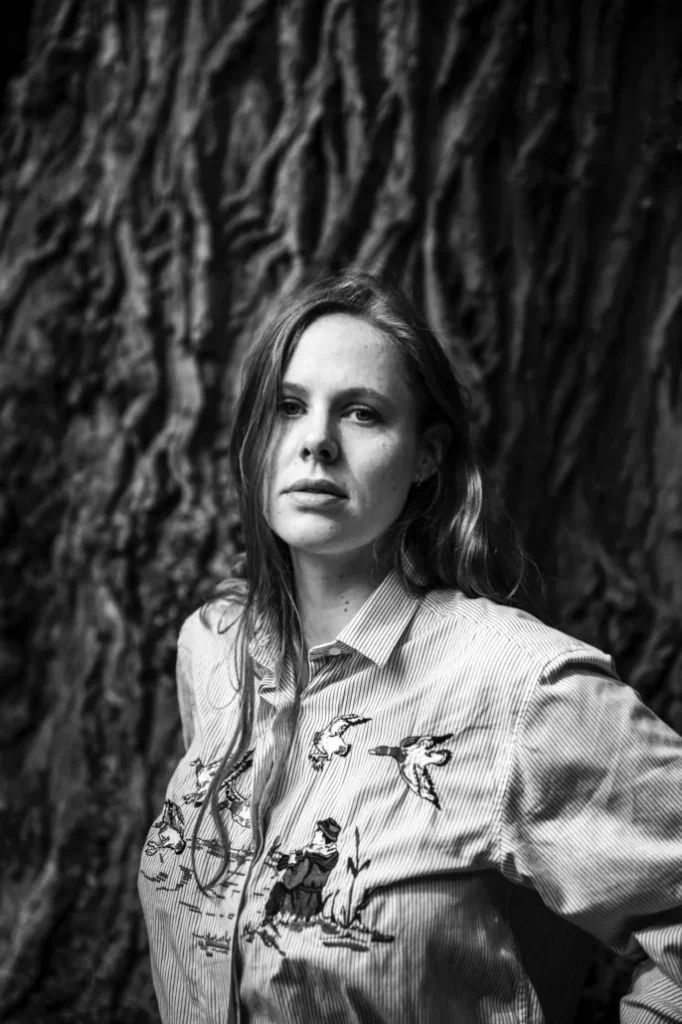
Portrait af Ida Malene Hartmann Rasmussen. Foto: Anders Rye Skjoldjensen
Ida Hartmann – Graphic Novel Artist
The autobiographical ‘Stilstand’ is 31 years old Ida Hartmann’s debut, made in collaboration with danish indie studio Niila Games. Ida is from the comic and zine underground in Copenhagen, where drawings are raw and grotesque and feelings are worn on the sleeves.