

Video games colors are important. Of course, you’re saying, “Well, duh.” How colors are used in video games is what helps to make a great game. Color theory is the understanding of colors and is an important part of video game design. Colors set off certain moods, feelings, reactions, and combinations of colors to take a person from one feeling to another in a smooth or drastic way, depending on what emotion you are trying to get. Understanding how to do this, and how to do it well starts with understanding colors and how they work and effect people. In this article, I will talk about colors and how they work with other colors as well as how colors work for people.
Color Wheel
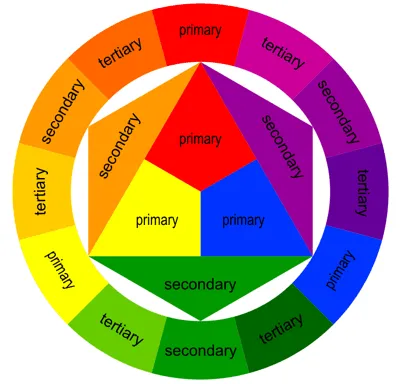
The color wheel is a great tool. This tool helps you know how to mix colors perfectly with paint, colored pencils, markers, and even with Photoshop. Basic color wheel will contain just primary, secondary, and tertiary colors and more advanced ones will contain the hues, tints, shades, and sometimes more specific details about how to use the colors. Anyone who works with colors should know how to make a color using any type of color medium, and should also have one on hand at all times. Eventually, when a designer becomes proficient with colors, he or she won’t need the wheel, except for something to look at when he or she is having color artist’s block, but it is definitely a mandatory tool.
Primary Colors
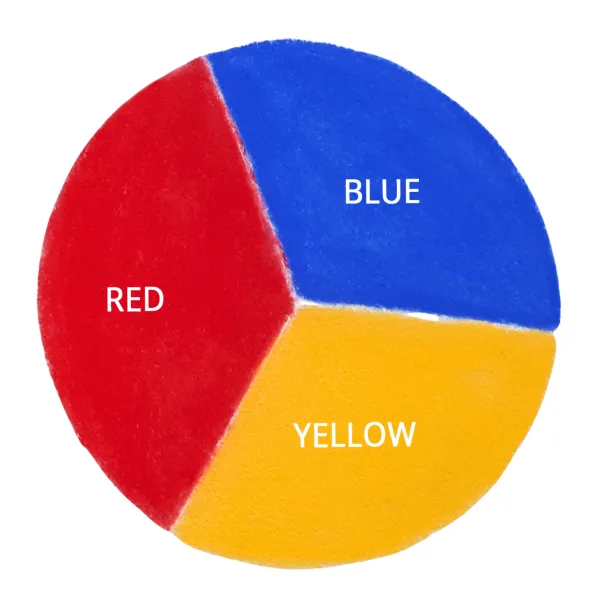
The primary colors are red, blue, and yellow. Basically, they are called primary because they cannot be made by mixing other colors together.
Secondary Colors
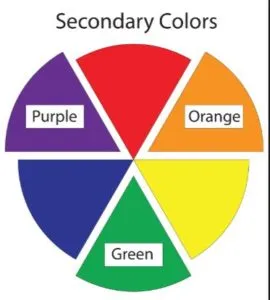
Secondary colors are the color formed when 2 primary colors are mixed together.
Tertiary Colors or Intermediate Colors
Tertiary or intermediate colors are made by mixing one primary and one secondary color together.
Complimentary Colors
Complimentary colors are sometimes called opposite colors because on the color wheel, they are the colors opposite of one another.
Split Complimentary Colors
Split complimentary colors are one color on the color wheel with the two colors that are next to the first color’s opposite.
Diad Colors
Diad colors are two colors that are two colors from each other on the color wheel.
Triad Colors
On the color wheel, triad colors are three colors that are equally spaced from each other.
Tetrad Colors
Tetrad colors are defined as four or more colors on the color wheel.
Warm Colors
Warm colors, sometimes called aggressive colors are the colors on one half of the color wheel that will normally be more attention grabbing. They are the reds, yellows, and oranges.
Cool Colors
Cool colors, sometimes called recessive colors are the colors on one half of the color wheel that normally give off a calm feeling. They are the blues, violets, and greens.
Analogous Colors
Analogous colors are colors that are next to each other on the color wheel. Normally they are either one primary or one secondary color and two tertiary colors.
Neutral Colors
Neutral colors are brown and tan colors. They are essentially the mixing of opposite colors.
Intensity
Intensity or chroma is the brightness or dullness of colors. Adding brown to colors will bring the intensity down.
Rainbow Colors
Rainbow colors are all six primary and secondary colors. They are also the colors we as humans can see from our color spectrum.
Color Saturation
Color saturation is how much or little of the color we can see. To bring down the intensity of a color you would normally ad grays, whites, blacks or a combination of them.
Tint Colors
Tinted colors are colors that have white added to them.
Tone Colors
Toned colors are colors that have gray added to them.
Shade Colors
Shaded colors are colors that have black added to them.
Meanings of Colors
There are many meanings for colors. Some meanings are localized to a community or culture, and some are world wide. Listed below are some of the more common meanings for the colors.
Blue:
trust, smart, calm, faith, natural, stable, power, peace, confidence, tranquility, sincerity, affection
Green:
soothing, environment, natural, envy, jealousy, balance, restful, life, growth, healing, money
Yellow:
cheer, attention, childish, fresh, warmth, energy, optimism, joy, intellect, caution, coward
Orange:
health, attraction, stand-out, thirst, wealth, youthful, happiness
Red:
love, immediacy, energy, sale, passion, anger, hunger, danger romance, style, excitement
Violet:
royal, mysterious, arrogant, luxury, childish, creative, sadness, dignity, wisdom, spirituality, magic
Pink:
tenderness, sensitive, caring, emotional, sympathetic, love, sexuality, romance, compassion, beauty, friendship
White:
freshness, hope, goodness, light, purity, cleanliness, simplicity, coolness
Black:
solo, rich, power, mystery, elegance, evil, strength, sophistication, death
Gray:
stability, security, strength of character, authority, maturity, business, cold, distinctive
Brown:
organic, health, comfort, nature, durability, order, casual, reliable, genuine, dependability, dull
Video Game Colors Conclusion
When putting a video game project together, it’s important to keep all of these color types and meanings in mind. A game designer will possibly want to know how many focus colors the game will use, what kind of emotion the game will give, what age group the game is being marketed for, and many other things. This type of information will help a game designer know what type of colors and color schemes he or she should use.
So what’s your favorite color?