

Reinhard Vree, Head of Product Management & Licensing at astragon Entertainment, explains his approach to acquire world-famous brands.
Our objective at astragon is to integrate brands by numerous manufacturers in a way that is true to the real-life original, and to build a trusting partnership with our industry partners right from the start. Therefore, our goal is always to find an agreement that will benefit both parties from the get-go whenever we make an initial contact.
Before we start diving right in: Please keep always in mind, that many manufacturers do not own a proper licensing department to deal with your inquiry. That is why approaching them can be quite challenging and time-consuming, and may even lead to no success and result at all.
1. The foundation: Research, explaining the games industry as such, astragon’s products and what a product placement in virtual worlds can offer to the respective partner
No matter what business you work for, what your inquiry is in detail, or which job position you hold in your company, it is simply not easy to get a first foot in the door of globally acting players with world-famous brands. So, you really have to be influential, make sure to try to understand the structures of the company you want to have on board, and find out what is most important for the contact you will be dealing with. In addition, for a lot of people from other, more conservative industries the games industry is a business that still needs to be explained in detail as it is totally new to them. Meaning that questions like “Will you be able to shoot and kill people in your game?” may be asked by your potential new partner’s contact even when it comes to a game like Bus Simulator. Thus, there is a lot of basic explanations needed on your end until a potential licensing candidate understands the whole benefit an in-game usage can bring to their brand.
Digitalization in other industry sectors, the increased quality bar of the games presented, and international top-selling IPs like “Construction Simulator”, “Farming Simulator”, “Mudrunner”, and “Euro Truck Simulator” of course already helped opening some doors. As a result, it is nowadays a lot easier to talk to potential partners than back in the days when the whole “Simulator phenomenon” first picked up speed in Germany.
Speaking of contacts, it is most important to have the right contact to talk to at a global company which usually has several thousand employees all over the world. So, the first step is to find those right contacts. This can be done by attending (digital) industry events, by doing online research or by simply calling the headquarter of the company and asking for the right person to speak to. This is of course not a job for introverted people. Good communication skills are needed from the first conversation you will have until the last approval you will get from the partner shortly before the launch of your game. Once you have acquired the right contact, a first personal call which leaves him or her with a good first impression, and a well-prepared pitch presentation are the keys to getting started. If you have a good product, a good track record, the key benefit for the potential partner, and some references of former projects implemented in your presentation, this first introduction will go much easier for you. Since many of the people you will talk to will have marketing backgrounds, some key figures about your game will help to convince them.
Despite all our experience with successfully acquiring brand partners, we at astragon absolutely do have companies in our data base, that we have been talking to for more than 5 years now without being able to include their products in our games. Just be patient and do not take the rejection personal. It is like it is, and there is always a reason why you might even be “ghosted”. Every inquiry that reaches a potential partner means extra work for the respective person in charge. Always keep that in mind and be on point. So, as I have already mentioned before, it is essential for your pitch presentation to emphasise the benefit the company this person is working for will have from entering into a cooperation with you. These are the first steps you will have to take to get a brand into your game. Once having persuaded the right person, of course all the paperwork needs to be done. This can be a very time-consuming matter which also involves a lot of other persons on the side of your license partner. Usually, big companies do have legal departments, license agents, brand managers and marketing directors, engineers etc., and it might happen that you will have to deal with all of them or at least with more than one person at a time, plus different mindsets and different goals within the company before you can include the desired brand in your game.
2. We have an agreement – Let`s get started!
After the paperwork is done, the real work begins. Meaning that the models can now be built by the developers. This process can usually be broken down into several phases. We will be using the example of our current project, Bus Simulator, to illustrate this further:
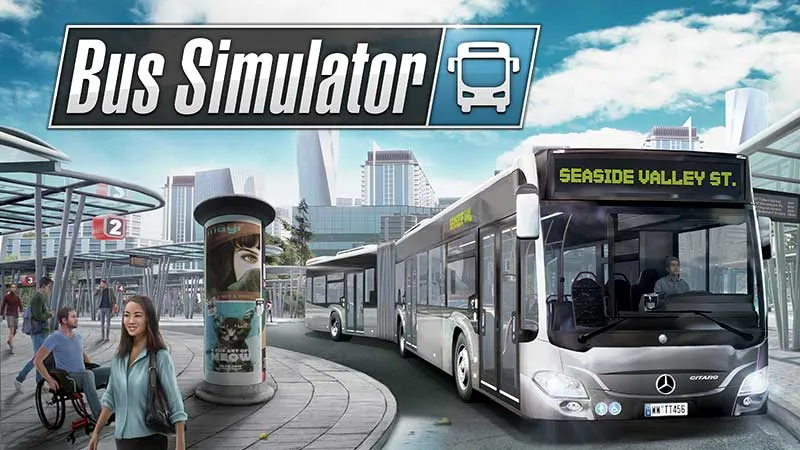
Data is delivered (or not):
Developer, publisher and license partner have agreed on a data format, that will be the basis of the 3D models. Usually, the data format comes from the engineering department of the partner. The quality of the files varies a lot. They can be really good and on point, but we also had cases which forced us to laser scan a machine because there was no 3D data, or because the future partner did not want us to use the already available data.
In the unfortunate event of data being unavailable, our artists will set out to first gather a visual library of resources regarding the bus in question. This library is often composed from photos taken at trade shows or during everyday use in and around the bus, the user manuals of the respective vehicle or other available technical specifications, as well as existing video material showcasing the bus. This collected material will then be reviewed together with the future partner and, if approved, will be used to create the bus from scratch.
Laser scans
Laser scans of course mean more effort and costs for the publisher and the developer, as the point cloud format (the standard format for laser scans) is totally different to the file format a regular 3D file is usually provided in. Furthermore, a “real-life” machine to be scanned needs to be found in cooperation with the industry partner, which puts even more organisational tasks onto the shoulders of the project team. Usually, such a machine can be found at a sales partner of the manufacturer, or directly at the manufacturer’s factory. Next, a company needs to be found and paid to do the laser scan. In addition, someone from the developer or publisher team needs to be on site to coordinate the laser scans and probably shoot videos and photos for social media and behind- the-scenes material.
Data review
The developer looks at the files and checks several aspects:
- Is the file format working as a reference for the proportions of the model?
- Does the 3D format include everything the artists need to build the machine in total? This goes for the exterior as much as for the interior (cockpits, dashboard)
- Do we have all logos that need to be placed onto the machine?
- Do we have a manual that shows us all the functions of the machine?
- In addition to the logos of the respective model on the machine, do we have the logos of the brand which we want to use in press releases, social media posts, homepage etc.?
- Have we agreed to a certain default look of the machine in-game? If yes, do we have enough photos to get the textures right?
Sounds
Another component of machines, cars, excavators or buses in a game is their unique sound. This is an important aspect especially for simulation games, as everything needs to sound realistically.
It begins with properly planning what sounds are needed in the game and where to get them from. While everyday sounds of environments, birds, or common city noises can be found in sound libraries, sounds of specific bus models need to be recorded individually. In the case of Bus Simulator, we worked with our partner Only Sound for recording different bus models. This includes recordings of every knob, button and switch in the cockpit, all the doors from the in- and outside, all sounds the bus emits while in action such as parking brakes, the activation of the retarder and of course the engine. Each of these sounds were recorded multiple times to capture variation.
The bus engine is the heart of the simulation experience and Only Sound recorded the engine at different RPMs as it can be heard from the cockpit, from further back in the bus, and from the outside, to capture many perspectives and guarantee an authentic sound from different character and camera positions in the game. After this, all the recordings were catalogued and sent over to Chris Polus, Audio Director at stillalive studios, who had to cut all the long recordings into manageable snippets that would be usable in the game engine. In the end, when you drive a bus and open a door, the game picks one out of up to 8 recordings that are specific to this door depending on the position of your player character (inside or outside the bus). This resulted in several hundred samples that had to be recorded, edited, processed and implemented for Bus Simulator in order to make the audible experience feel great to the player.
3. The model is ready – What happens next?
So, now that all your artists’ work is done, you can simply merge the model with the rest of the game and launch it to an excited audience, right? Well, let’s not get ahead of ourselves here! Being a reliable partner always means that each step you do that involves the use of the external brand needs to be approved by the brand holder. You need to prove that the trust a company has placed in you by signing the license agreement is justified. So, do your job right, stick to the details agreed upon and try to be 100% service-oriented on a 24/7 basis. This will help developing long-term business relationships that last longer than just one game.
Besides the 3D model as such, this also means that the functions of the model need to be shown to the partner. Finally, all marketing materials and packaging need an approval. As mentioned before in this article, a lot of people are involved in the whole process. We will concentrate on the model first: The approval process is divided into two parts. Usually, the 3D model is shared with the partner without having worked on any animations or having a game build ready that features the model within the game. This first step of the approval process is more about the architecture of the model and its generals looks. Are the logos inside and outside of the machine positioned the right way? Is the dashboard and its proportions correct and realistic? What do the engineers of the partner say who initially provided the 3D data?
Once the marketing and engineering teams of the partner give their “thumbs up” to the model, it is implemented into the game and all functions/animations are added. Once this step is done, the second approval round starts and a game build or a captured video is shared with the partner to give an impression of how the finished machine will fit into the game world and how it will interact with its environment. Ideally, both of these approval rounds can be combined to save time on both ends.
However, this is not always possible depending on the roadmap of the development. It is always better to combine and structure as many approval tasks as possible in one email with linked priorities instead of sending several approvals to your partner. This helps you and your contact person to stay on track with the diverse approval tasks and shows that you are being a real professional. Once all models are approved, and the marketing roadmap is finalised, the real fun starts.
It is time to tell the world about your accomplishments!
Once the approval process is complete, you are finally ready to promote your collaboration and focus on properly marketing your game. Work out a plan and strategy that answers the following questions:
- When and how do I want to unveil this collaboration and start the communication?
- What do I want to share and let my audience know about this partnership?
- What do I want to achieve with this PR beat for my product and for the partner?
This will help you to coordinate your activities way more efficiently and opens the chance to introduce your partner to the communication roadmap. Discuss your approach openly with the license holder and you will see that in most of the cases this will already generate synergies and possibly give you access to new opportunities.
For instance, are you focusing on screenshots only, or will you produce a dedicated trailer for the partner and promote it on social media?
Depending on your strategy, chances are that the license partner will join your marketing efforts and share the news and assets on their side as well. Also, listen to your partner’s ideas and needs carefully and try to adapt your strategy accordingly, like creating specific assets that will facilitate the promotion for your partner or provide a build to be showcased during a partner’s event. Keep in mind that all your internal staff should be happy with the assets first before sharing them with the partner. Always have a look at your trailers, screenshots, and social media assets with more than one person to have an internal quality control before you start distributing the assets.
Following the partner campaign, you should invest some time to collect the feedback, results and KPIs, and provide a report summarizing the achievements. By doing this, your partner will be able to better understand and appreciate your efforts and realize the added value that you have created for them during the collaboration, such as raising brand awareness and visibility, as well as introducing them to a whole new audience.
In addition, this approach is also beneficial to your business in general as keeping record of your campaigns’ results will simplify new discussions and negotiations with other potential partners. You can also use your experiences with previous collaborations to improve the performance of future campaigns and identify further opportunities.
Although marketing plays an important role, you will not always be able to convince your partner to join your efforts. Do not take this as a failure and do not have regrets about the hard work you put into all this. As already mentioned before, not every company you would like to collaborate with has a dedicated department for this kind of inquiry and even if you succeed to reach out to the right contact person, please consider and respect that they have their own tasks and duties to pursue. It might be that your project is immaterial to their overall business and marketing strategy and thus not suitable to be distributed among their audience and their platforms.
All in all, working with a license holder is a demanding and yet great experience. It will enrich your game with more authenticity by making it unique in comparison to other, similar games and allow both your partner and your product to reach a bigger audience.